Friday, May 24, 2013

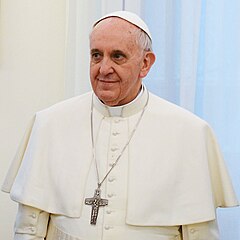
Media falsely represents Pope on atheism


What was said
It is reactions such as those in response to the Pope's recent homily that lead me to believe the Catholic Church is the most consistently misrepresented institution in the world. What did Pope Francis I say to result in headlines from secular media like:
Pope Francis: 'Even the atheists' can go to heaven (New York Daily News)
Pope Francis: Being an atheist is alright as long as you do good (The Independent)
Pope Francis Says Atheists Who Do Good Are Redeemed, Not Just Catholics (Huffington Post)
Pope lets atheists off the hook, saying Lord redeems us all (msn.com)
Here is what the Pope said during the March 22 homily in question (Recap at Vatican Radio; emphasis mine):
[T]he Lord has created us in His image and likeness, and has given us this commandment in the depths of our heart: do good and do not do evil...The Lord has redeemed all of us, all of us, with the Blood of Christ: all of us, not just Catholics. Everyone! ‘Father, the atheists?’ Even the atheists. Everyone! And this Blood makes us children of God of the first class! We are created children in the likeness of God and the Blood of Christ has redeemed us all! And we all have a duty to do good. And this commandment for everyone to do good, I think, is a beautiful path towards peace. If we, each doing our own part, if we do good to others, if we meet there, doing good, and we go slowly, gently, little by little, we will make that culture of encounter: we need that so much. We must meet one another doing good. ‘But I don’t believe, Father, I am an atheist!’ But do good: we will meet one another there. ... Today is [the feast of] Santa Rita, Patron Saint of impossible things – but this seems impossible: let us ask of her this grace, this grace that all, all, all people would do good and that we would encounter one another in this work, which is a work of creation, like the creation of the Father.
If you are asking yourself where the Pope said atheists are "off the hook" or that atheism is "alright," you are not alone. Part of the problem may begin with the term "redeemed."

Source of confusion?
It seems some believe the term "redeemed" means one will necessarily go to heaven. In fact, that confusion is articulated in the msn headline, which equates being redeemed with being "off the hook." The Huffington Post article states:
Of course, not all Christians believe that those who don't believe will be redeemed, and the Pope's words may spark memories of the deep divisions from the Protestant reformation over the belief in redemption through grace versus redemption through works.
The article confuses "redemption" with assuredness of going to heaven (not to mention that the issue was grace "versus" works, but that's another post). Let's look quickly at the Church's understanding of the term "redemption":
CCC#432 The name "Jesus" signifies that the very name of God is present in the person of his Son, made man for the universal and definitive redemption from sins. It is the divine name that alone brings salvation, and henceforth all can invoke his name, for Jesus united himself to all men through his Incarnation, so that "there is no other name under heaven given among men by which we must be saved.
In Catholic teaching, there is no novelty in pointing out that Christ's redemptive Passion includes all souls, whether atheist or otherwise. Having come incarnate as a human, he is united with the human race.
Hebrews 2:9-17 9But we see Jesus, who for a little while was made lower than the angels, crowned with glory and honor because of the suffering of death, so that by the grace of God he might taste death for every one. 10For it was fitting that he, for whom and by whom all things exist, in bringing many sons to glory, should make the pioneer of their salvation perfect through suffering. 11For he who sanctifies and those who are sanctified have all one origin. That is why he is not ashamed to call them brethren, 12saying, "I will proclaim thy name to my brethren, in the midst of the congregation I will praise thee." 13And again, "I will put my trust in him." And again, "Here am I, and the children God has given me." 14Since therefore the children share in flesh and blood, he himself likewise partook of the same nature, that through death he might destroy him who has the power of death, that is, the devil, 15and deliver all those who through fear of death were subject to lifelong bondage. 16For surely it is not with angels that he is concerned but with the descendants of Abraham. 17Therefore he had to be made like his brethren in every respect, so that he might become a merciful and faithful high priest in the service of God, to make expiation for the sins of the people
Prior to Christ's work, mankind remained in a futile position separated from God, exiled from the "Garden of Eden," in which God dwells. If I might propose this concept in simple terms, Christ's "redemption" reverses the futile position of mankind in Adam, and makes open for mankind the way to heaven. It is as if a door had been locked and was finally opened by Christ. He welcomes all to enter the door, even though not all will do so. The door is open to all, even through all don't enter. The media has confused an open door with everyone having passed through it.

To reiterate, universal "redemption" does not mean everyone will go to heaven. When Pope Francis says Christ "redeemed" atheists, it is incorrect to interpret that as him saying atheists are "off the hook." The media behaved as if the Church did not previously believe Christ's redemption was universal. To hold the position that Christ's work effects only a select group of persons and that all others are "passed over" is the concept of "limited atonement," native only to a few Christian traditions, such as Calvinism.

The MSN post went so far as to claim Pope Francis has parted ways with Pope Benedict on the matter, which is likewise nonsensical, but may represent a lingering resentment toward Pope Benedict whom the media often misrepresented or derided.

Doing good is a place for believers and non-believers to "meet"
If one simply reads what the Pope actually said, the place believers and atheists can "meet" by "doing good," is simply a place where good is done together, which can lead to a "path toward peace." Again, it would be to add to the Pope's words to say this statement lets atheists "off the hook." Rather, the Pope is merely identifying a common ground where believers and non-believers can "meet" because doing good is written on everyone's heart. It's a starting point. From there, the Church's hope, as we will see further below, is that all souls unite with the Church.

So can an atheist go to heaven?
In Catholic theology, anyone who goes to heaven goes there because they belong to Christ's Church. That is a consistently taught dogma of the faith. Three paragraphs in the Catechism shed light on the matter (emphasis mine):

846 How are we to understand ["Outside the church there is no salvation"] often repeated by the Church Fathers? Re-formulated positively, it means that all salvation comes from Christ the Head through the Church which is his Body: Basing itself on Scripture and Tradition, the Council teaches that the Church, a pilgrim now on earth, is necessary for salvation: the one Christ is the mediator and the way of salvation; he is present to us in his body which is the Church. He himself explicitly asserted the necessity of faith and Baptism, and thereby affirmed at the same time the necessity of the Church which men enter through Baptism as through a door. Hence they could not be saved who, knowing that the Catholic Church was founded as necessary by God through Christ, would refuse either to enter it or to remain in it.
847 This affirmation is not aimed at those who, through no fault of their own, do not know Christ and his Church: Those who, through no fault of their own, do not know the Gospel of Christ or his Church, but who nevertheless seek God with a sincere heart, and, moved by grace, try in their actions to do his will as they know it through the dictates of their conscience - those too may achieve eternal salvation.
848 "Although in ways known to himself God can lead those who, through no fault of their own, are ignorant of the Gospel, to that faith without which it is impossible to please him, the Church still has the obligation and also the sacred right to evangelize all men."
So the answer to can an atheist go to heaven "may" only be affirmative if such atheists "through no fault of their own" are ignorant of the Gospel, but "seek God with a sincere heart," trying to do God's will to the best of their ability. This means their heart is so disposed that if they properly received the Gospel, they would embrace Christ. Remember, this particular teaching is presuming a person is innocently ignorant of the Gospel. Only to such souls would this apply. The Church says that such persons "may" attain salvation if they are of the disposition to receive Christ and thus "may" be in an extenuating way united to that body of Christ apart from which there is no salvation. Ultimately, the Church does not know, concluding "in ways known to [God]" might such salvation through Christ occur.

Not in doubt is that the Church teaches no salvation apart from Christ. If the media cited intentionally misrepresented the Pope's words in order to make it appear as if he teaches that salvation exists apart from Christ, their action is condemnable and even disgraceful.

Getting back to the question at hand, one may ask how an "atheist" can "seek God with a sincere heart" since atheism by definition declares there is no God. I suppose the declaration of atheism would itself have to be a product of that soul's innocent ignorance of the Gospel or even of the existence of God. It may be impossible for there to be such a person who genuinely denies the existence of God yet seeks Him with a sincere heart. I say this because it would seem merely the act of "seeking" would disqualify the person as a genuine atheist. Rather, such a person is probably more fittingly called "agnostic," or uncertain of whether there is a God, yet still seeks.

Ultimately, as paragraph 848 concludes, Catholics must present the truth of the Gospel to all souls and not depend on some unknown, extenuating way God "may" unite them to the Church.

Wednesday, May 22, 2013

What did the Church teach about marriage, men and women in 1880?


ON MARRIAGE
Gioacchino Vincenzo Raffaele Luigi Pecci became Pope Leo XIII and served from 1878-1903. His encyclical, Arcanum, was delivered to the Church on February 10, 1880. The content of the encyclical reveals certain difficulties confronting the Church at that time with regard to the institution of marriage. Many of his comments remain remarkably pertinent in 2013 as the institution of marriage faces consistent opposition from the secular culture. Following is an examination of several paragraphs in the encyclical. (bold subheads are mine, bold emphasis is mine; paragraph numbers follow each)
ON THE CORRUPTION OF MARRIAGE
We record what is to all known, and cannot be doubted by any, that God, on the sixth day of creation, having made man from the slime of the earth, and having breathed into his face the breath of life, gave him a companion... [Christ] bore witness to the Jews and to His Apostles that marriage, from its institution, should exist between two only, that is, between one man and one woman; that of two they are made, so to say, one flesh; and that the marriage bond is by the will of God so closely and strongly made fast that no man may dissolve it or render it asunder. ... This form of marriage, however, so excellent and so pre-eminent, began to be corrupted by degrees, and to disappear among the heathen; and became even among the Jewish race clouded in a measure and obscured. For in their midst a common custom was gradually introduced, by which it was accounted as lawful for a man to have more than one wife; and eventually when "by reason of the hardness of their heart," Moses indulgently permitted them to put away their wives, the way was open to divorce. (#5-6)
Early in the encyclical, the Pope points out how the original pedigree of marriage occurred between "one man and one woman." The phrase echoes unto today. Anyone who would claim that the Church  attempted to impose this definition only in light of current challenges to marriage would be mistaken.

Where history attempted to justify multiple wives, for example, the Church was there to point out the proper order for the institution of marriage as between one man and one woman.

It seems the natural law, to which biology itself speaks, is signal to the proper quality of a single male-single female relationship. All persons are the fruit of one man and one woman, which points to the natural order of a child raised by his or her parents, a family unit, a natural foundation for humanity. Properly functioning biology admits to no exceptions to this reality. In fact, once the female egg is fertilized by a sperm, a "cortical reaction" occurs which ensures only one sperm fertilizes the egg. Biology itself is a signpost to the order of one man and one woman, to its potency, that it is only this arrangement which "bears fruit." Nothing other than one man and woman in a marital act is capable of such potency.

This is not to exclude the religious aspect to the Church's teaching on marriage. The natural order merely fortifies that which the Church teaches, and serves as a signpost that this sort of union is unique. The evidence we can observe empirically supports the Church's teaching. The Catechism reflects continuity with Pope Leo in the following:
"The intimate community of life and love which constitutes the married state has been established by the Creator and endowed by him with its own proper laws. . . . God himself is the author of marriage."The vocation to marriage is written in the very nature of man and woman as they came from the hand of the Creator. Marriage is not a purely human institution despite the many variations it may have undergone through the centuries in different cultures, social structures, and spiritual attitudes. These differences should not cause us to forget its common and permanent characteristics. Although the dignity of this institution is not transparent everywhere with the same clarity, some sense of the greatness of the matrimonial union exists in all cultures. "The well-being of the individual person and of both human and Christian society is closely bound up with the healthy state of conjugal and family life." (CCC#1603)
Elsewhere in the encyclical Arcanum, Pope Leo speaks of the divine pedigree of marriage itself. He writes: "marriage was not instituted by the will of man, but, from the very beginning, by the authority and command of God." (#39) As throughout the centuries, unto today, the divine origins of marriage are denied, and the religious background of marriage, particularly in western culture, is rejected. Thus marriage is considered a malleable institution, changeable at the whim of man, a law to be rewritten if so voted, no more or less special, not more or less permanent than any other vote of a senate. One could expound a lengthy treatise on the religious foundation of marriage, and its strength in the Church. Suffice it to say for the purposes of this analysis, and as we will see further below, the Church's teaching on marriage remains the empirically superior foundation for society.

One of the arguments set forth by proponents of same-gendered unions to be called "marriages" goes something like this: marriage is already in such shambles, with over 50% divorce rate, etc.,  thus, why not give same-gendered couples a chance. The argument, of course, fails to confront what a marriage actually is. The reason the Church cannot call any non-one man-one woman union a marriage is because it cannot. The example above from Pope Leo regarding concubines exemplifies that. The matter, despite the many derogatory names thrown at the Church, is not one related to any sort bigotry, but one of reality. Defending reality, defending the truth, done with due respect and humility, is an act of love toward another, especially when emotions run high.

The "divorce" argument set forth also highlights the prophetic accuracy of the Church, such as Pope Leo XIII when he spoke out against divorce. Yes, marriage in society is poisoned, but it is because various powers have fought to deviate its characteristics from that which the Church and natural law and reason have taught. In other words, marriage did not become a sick institution because modern society listened to the Church. Marriage became a sick institution because society didn't listen to the Church. Even unto today, modern society seeks to deviate from that which the Church exhorts. One wonders how many times the Church has to be right before the masses listen to her.

Let us examine another paragraph from Pope Leo's Arcanum:
ON HARMS OF DIVORCE
Truly, it is hardly possible to describe how great are the evils that flow from divorce. Matrimonial contracts are by it made variable; mutual kindness is weakened; deplorable inducements to unfaithfulness are supplied; harm is done to the education and training of children; occasion is afforded for the breaking up of homes; the seeds of dissension are sown among families. (#29)
Here the Pope reflects on some of the harms of divorce, including the seemingly often forgotten victims of divorce: the children. Again, the empirical consequences of divorce demonstrate its inferiority, and thus support the Gospels' teaching that divorce severs something holy. And I would exhort pause to any reader hurt by divorce either directly or indirectly, as if hope is beyond their reach, or as if the Church does not grieve for such suffering in this fallen, temporal world. The general purpose of this blog post relates to moral doctrines. Assistance for those hurt by divorce or other harms relating to imperfect marriage or sinful relationships is a pastoral matter. There are many resources online and at local parishes for such souls (here are several resources from Catholic.com)

On a related note, the Pope also criticized cohabitation as immoral (44). Not only is this considered immoral because it invariably interjects the marital act outside the commitment in which it is belongs, but the the empirical evidence against cohabitation indicates it may be even more harmful to families, children, and society than divorce. There is also science lending evidence to support the idea that sexual activity belongs to a committed relationship. For instance, a University of California-San Francisco study concluded that during such activity, the body releases chemicals like oxytocin, vasopressin, and endorphines that tend toward fortifying monogamous relationships. A non-committed, sexual relationship may be prone to a variety of problems, perhaps due in part from the confusion of a committed activity in a non-committed environment.

ON MARRIAGE CONCERNING MEN & WOMEN
Continuing the preceding paragraph on divorce, the Pope next wrote that with divorce
the dignity of womanhood is lessened and brought low, and women run the risk of being deserted after having ministered to the pleasures of men. (29)
The Pope seeks to protect the "dignity of womanhood." He also implies the problem of men uniting with women for purposes of physical pleasure, and departing from them once gratified. Whether such an act occurs in the context of divorce or in an extra-marital action, either is a violation of her dignity, to sin against her and the divine. In 1880, a culture that frowned upon extra-marital relations far more than 2013's culture, if a man sought to use a woman for sexual gratification, he may have been more prone to delude himself into marriage and then rid himself of her once the fleeting auspices under which he entered the sacrament disintegrated. Since today's culture condones and even promotes extra-marital sexual activity, the Pope's warning about the objectification of women runs all the greater risk.

What makes such a statement in the encyclical the more profound is how much it contradicts modern stereotypes of misogyny in the Church today and yesterday. Vocal, modern feminists have been known even in recent days to belittlingly brand the Church as "octogenarian men" or use the media buzz-phrase that the Church wages "war on women." The tragedy of the matter is that the Church seeks to protect and provide that which is best for all genders, and yet a number of souls, including women, do not recognize the protection fought for them by the Church. Nor do they acknowledge those occasions when the Church was a leading voice for the cause of women.

Against a modern culture which does not hesitate to make the claim that the Church's views on women are "outdated," the 19th century Pope, a little shy of 70 years at the time of Arcanum, here was the Pope of the Catholic Church, condemning not only divorce, but affronts to women, including mistreatment by men, and objectification by men. How can this "'old man,' this 'Church' man, be concerned with women? How does he not condone whatever men want to the detriment of women?" the modern skeptic might cry. Yet the cry belies the reality.

The Church's voice today remains one of a few striving for women's best interests. The current U.S. government openly admits to requiring health care plans, including those of religious entities, provide for chemical drugs that increase the risk of several cancers in women. Although the Church's ultimate caution against such drugs relates to spiritual health, it has been the Church, and members of the Church that have been the most vocal about informing the public of the physical risks involved with these chemicals. Proponents of such drugs have been consistently silent on the drugs' harmful side effects. Additionally, it is sometimes pointed out that approximately half of aborted children are female. And yet it is the Church striving to protect these females as well. Other examples could be given. Fortunately, there are a number of current female researchers and authors striving to communicate the message that the Church's teaching is for the best interests of women and men alike. (see links at bottom)

Earlier in the encyclical, Pope Leo states:
All nations seem, more or less, to have forgotten the true notion and origin of marriage; and thus everywhere laws were enacted with reference to marriage, prompted to all appearance by State reasons, but not such as nature required. Solemn rites, invented at will of the law-givers, brought about that women should, as might be, bear either the honorable name of wife or the disgraceful name of concubine; and things came to such a pitch that permission to marry, or the refusal of the permission, depended on the will of the heads of the State, whose laws were greatly against equity or even to the highest degree unjust. Moreover, plurality of wives and husbands, as well as divorce, caused the nuptial bond to be relaxed exceedingly. Hence, too, sprang up the greatest confusion as to the mutual rights and duties of husbands and wives, inasmuch as a man assumed right of dominion over his wife, ordering her to go about her business, often without any just cause; while he was himself at liberty "to run headlong with impunity into lust, unbridled and unrestrained, in houses of ill-fame and amongst his female slaves, as if the dignity of the persons sinned with, and not the will of the sinner, made the guilt." When the licentiousness of a husband thus showed itself, nothing could be more piteous than the wife, sunk so low as to be all but reckoned as a means for the gratification of passion, or for the production of offspring. (7)
For someone who is familiar with various blogs or media voices claiming the Church is against women or just wants women to manufacture babies (it is not hard to find exactly that claim), the above quote, from the 19th century, should steer them into shock. Here is the Pope from 1880, warning against women being used for gratification or merely "for the production of offspring."

The Pope here also warns against husbands who abuse what are "mutual rights and duties of husbands and wives." The Church is sometimes negatively deemed "patriarchal" because the ordained clergy, who by necessity as participants in a sacrament representing the male Christ, are exclusively male. The critique is to suggest males will not treat women fairly (e.g. see "war on women" link above). Often, those who hear the Scripture on wives called to be submissive to their husbands (Eph. 5:22, 1 Pet. 3:1) have difficulty with the passage because they understand the passages to suggest men are to give orders to be carried out by women who are merely servants. One can find lengthy discussions of the topic among friends or even on forums such those at Catholic.com. However, here the Pope criticizes men who "order her to go about her business"  in violation of their "mutual rights." The Pope develops more on this concept a few paragraphs later:
[T]he mutual duties of husband and wife have been defined, and their several rights accurately established. They are bound, namely, to have such feelings for one another as to cherish always very great mutual love, to be ever faithful to their marriage vow, and to give one another an unfailing and unselfish help. The husband is the chief of the family and the head of the wife. The woman, because she is flesh of his flesh, and bone of his bone, must be subject to her husband and obey him; not, indeed, as a servant, but as a companion, so that her obedience shall be wanting in neither honor nor dignity. (11)
You see here the Pope addressing the concept of a wife being "subject to her husband." And he explicitly rejects the idea that this arrangement means a wife is a "servant." Rather, she is subject in the order of "companion." Modern ears may have trouble with this, for it may be automatic to presume the Pope's use of "obedience" just means taking orders. Yet the comparison is to Christ and the Church. The Church is subject to Christ, yet Christ's leadership entails the sign of dying for his bride and even suggests serving her as Christ served his Church. There is a mutual exchange of, as the Pope says, "unfailing and unselfish help."

The man's part of loving his wife as Christ loved the Church is vital to the functionality of the equation. Pope Leo explicitly affirms this call of husbands when he says
[M]arriage [is the] example of the mystical union between Himself and His Church, He not only perfected that love which is according to nature, but also made the naturally indivisible union of one man with one woman far more perfect through the bond of heavenly love. Paul says to the Ephesians: "Husbands, love your wives, as Christ also loved the Church, and delivered Himself up for it, that He might sanctify it. (9)
The entire dimension of wives being "subject to" their husbands as a "companion" must be understood in concert with the idea that the husband must, as head, grant her "unselfish help," and love her as Christ loved the Church. When one meditates on the bloodiness of the crucifixion, which was the ultimate expression of Christ's love as head of his bride, the context of the role of husband becomes profound. Although both spouses are called to an unselfish giving to the other, it is Christ the bridegroom who leads the way, who initiates the pattern. The husband can do this in a variety of ways, whether it be protecting the household from various evils, or even sacrificing some leisure activity when his wife needs him to take out the trash, or watch the children, or listen to her, or whatever may entail his "dying to self" for the sanctification of his bride.

Undoubtedly, husbands who have not represented Christ in this regard have repelled many women from the very thought of subjecting themselves to such headship of a man. But if a man loved his wife like Christ loved the Church, what reasonable woman would not clamor for such love. If she should give herself as a companion to such a husband, to submit to such love as the Church is called to receive Christ's love, what strength such a marriage would possess.

Pope Leo goes on to quote the 4th/5th century's St. Jerome:
[A] law of marriage just to all, and the same for all, was enacted by the abolition of the old distinction between slaves and free-born men and women; 'and thus the rights of husbands and wives were made equal: for, as St. Jerome says, "with us that which is unlawful for women is unlawful for men also, and the same restraint is imposed on equal conditions." The self-same rights also were firmly established for reciprocal affection and for the interchange of duties. (14)
This is, of course, not to belittle the parts of Scripture exhorting the husband to a theological headship of the family. Pope Leo does speak of the husband as "chief of the family and the head of the wife."  The pendulum should not swing too far and reach a point of some modern feminists who believe gender equality means some dilution of gifts between men and women. As Catholic blogger and author Melinda Selmys wrote in a 3-part essay: "Perhaps the greatest mistake of mainstream feminism is the assumption that difference equals inequality. ... while God has created us as equals, we reflect his image in different ways."

The purview of Pope Leo's encyclical, as we have seen, emphasizes the contributions of husband and wife as analogous to Christ and the Church. Such theology has been since developed, keeping with Pope Leo all the way back to St. Paul. For example, Pope Pius XI spoke of the husband as "head" and wife as "heart," and if the husband should fail in his leadership duties, the wife must assume responsibility of "directing the family" (Pope Pius XI, Casti Connubii, 27-28, December 31, 1930). In Bl. Pope John Paul II's Theology of the Body, he emphasized a certain responsibility of husbands relative to Christ and the Church: "The love of Christ for the Church has essentially her sanctification as its scope." (Theology of the Body, St Paul's Analogy of Union of Head and Body Does Not Destroy Individuality of the Person, 6, August 25, 1982) The following week, he spoke of the husband's emphasis to love. When he speaks of the bride's "submission," he refers to the bride submitting to this love, to "experience" this love. (Theology of the Body, Sacredness of Human Body and Marriage, 6, September 1, 1982).

EPILOGUE
What I think Pope Leo XIII's encyclical Arcanum demonstrates is at least two-fold. First, the evidence proves that modern society's stereotype of a misogynistic Church is off the mark. Second, 143 years removed from this encyclical, we can see the consequences of not heeding the warnings of the Church with regard to marriage and its inherent qualities. Such evidence speaks of the divine assistance promised to the Church. If modernists continue dismissing the Church's wisdom, the disordered consequences in society will persist.


Additional resources:
How Abortion Hurts Women, CNA
Physicians for Life stats on harms of abortion on women
Women Speak for Themselves.
EWTN's The Catholic View for Women
Catholic Womanhood section at catholicnewsagency.com.
Important background information about the CDF-LCWR situation
Life Site News
Radio show A Closer Look with Sheila Liaugminas
Radio show Catholic Connection with Teresa Tomeo
Bloggers Jill Stanek, Jennifer Fulwiler, Kathryn Jean LopezMelinda Selmyz
Dr. Jennifer Robak Morse
Dr. Alice von Hildebrand
There are so many other great resources out there on Catholic women's issues and issues on marriage. If you have a favorite not mentioned here, please share in the comment section.

Friday, April 12, 2013

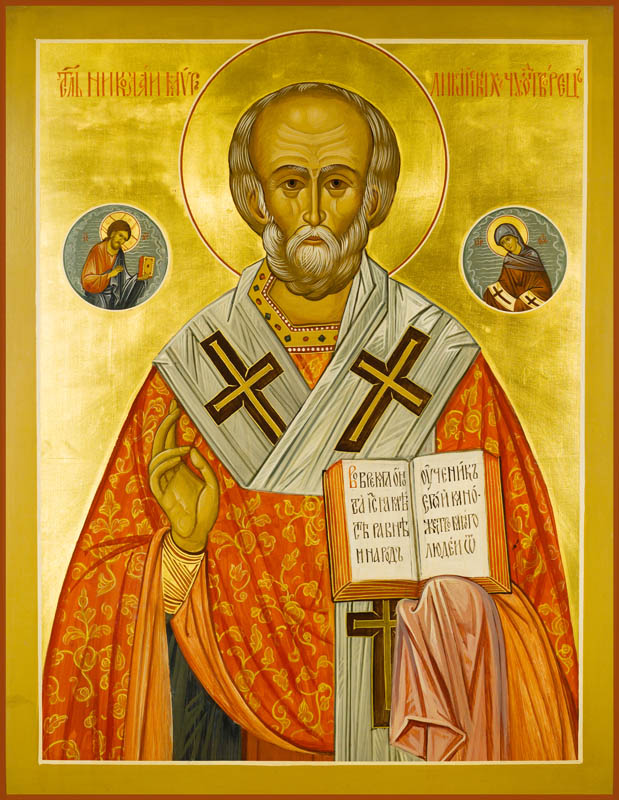
Veneration of icons and graven images


REFUTING A CRITICISM OF IMAGES
In a 1980 sermon by Pastor John MacArthur, he stated:
Idolatry is worshiping the wrong god and worshiping the right God in the wrong way. ... I think idolatry is also worshiping symbols that may stand for God. Now we've all-been aware of what is known as the iconoclastic controversy from the word eikon in Greek which means "image." Throughout the history of the church, the church was in its early manifestation of Romanism wanting to put everything in statues and the Roman Church still does that. ... And you still have crucifixes and other images and saints and so forth that represent a certain kind of idolatry. And you say, "Well, we don't really worship the idols it's just that the representation is there." Yes, but the transition is so subtle...so subtle.
MacArthur attempts to support his claim with two stories in Scripture. The first is when God commanded Moses to make a bronze serpent:
And the LORD said to Moses, "Make a fiery serpent, and set it on a pole; and every one who is bitten, when he sees it, shall live." So Moses made a bronze serpent, and set it on a pole; and if a serpent bit any man, he would look at the bronze serpent and live. (Num. 21:8-9)
MacArthur does not believe this is an example condoning at least some use of a graven images. Rather, he believes all such imagery is forbidden because it could eventually degenerate into idolatry. As evidence, he cites another Biblical text:
And [Hezeki'ah] did what was right in the eyes of the LORD, according to all that David his father had done. He removed the high places, and broke the pillars, and cut down the Ashe'rah. And he broke in pieces the bronze serpent that Moses had made, for until those days the people of Israel had burned incense to it; it was called Nehush'tan. (2 King 18:3-4)
Even though God commanded Moses to forge the bronze serpent (cf. Num. 21:8-9), MacArthur draws the following conclusion because of 2 King 18:3-4:
[Hezeki'ah] treated it with disdain get rid of that little brass thing that they were all worshiping. In other words, something started out as a symbol and it became an idol. And that is always a danger of an icon, that man will twist the symbol into an idol. So, whether you're talking about worshiping a false god or worshiping the true God in a wrong way, or worshiping God to a wrong image, it is all forbidden in Scripture.
Thus, according to MacArthur, because the people had eventually named and began worshipping the bronze serpent as a "god" in itself, therefore any use of a forged icon is forbidden or "idolatry" as he says above of Catholic crucifixes or images of saints.

However, let us confront the obvious. Did God or did not God command Moses to forge the bronze serpent in the first place? Num. 21:8 says God indeed commanded Moses to forge the serpent. But it seems the people who found healing when they gazed upon the serpent misunderstood from whence their healing came. The power was God's and it is God who deserved their worship. However, they apparently believed the healing power came from the bronze object itself.

Now just because the people eventually treated the serpent as a "god," it does not follow that all forms of graven images are forbidden. The conclusion would be tantamount to saying because a hospital patient failed to properly use the medicine given to him by the doctor, that therefore all medicine must be forbidden because there are some who abuse it. Thus it was not the forging of the image that was sinful, nor the gazing upon it for healing according to God's own command, but the sin was to worship the object as a god. MacArthur thus goes too far in saying any icon is de facto forbidden.

SEVERAL CHERUBIM STATUES IN SCRIPTURE
As well, there are other examples in Scripture regarding "graven images." In another example, God commands Moses to forge gold cherubim angels to flank the ark of the covenant:
And you shall make two cherubim of gold; of hammered work shall you make them, on the two ends of the mercy seat. Make one cherub on the one end, and one cherub on the other end; of one piece with the mercy seat shall you make the cherubim on its two ends. The cherubim shall spread out their wings above, overshadowing the mercy seat with their wings, their faces one to another; toward the mercy seat shall the faces of the cherubim be. And you shall put the mercy seat on the top of the ark; and in the ark you shall put the testimony that I shall give you. (Ex. 25:18-21)
Likewise, other areas of the temple bore carvings of cherubim angels:
Over against the threshold the temple was paneled with wood round about, from the floor up to the windows (now the windows were covered), to the space above the door, even to the inner room, and on the outside. And on all the walls round about in the inner room and the nave were carved likenesses of cherubim and palm trees, a palm tree between cherub and cherub. ... The nave and the holy place had each a double door. The doors had two leaves apiece, two swinging leaves for each door. And on the doors of the nave were carved cherubim and palm trees, such as were carved on the walls; and there was a canopy of wood in front of the vestibule outside. (Ezek. 41:16b-18a, 23-25)
The author of Hebrews (traditionally thought to be Paul), also describes the ark:
Behind the second curtain stood a tent called the Holy of Holies, having the golden altar of incense and the ark of the covenant covered on all sides with gold, which contained a golden urn holding the manna, and Aaron's rod that budded, and the tables of the covenant; above it were the cherubim of glory overshadowing the mercy seat. (Heb. 9:3-5a)
See also (1 King 6:29-32, 1 King 8:6-72 Chron. 3:7-14)

CATECHISM ON IMAGES
In Catholic theology, it is Christ himself in the new covenant who is the image of the living God.
Basing itself on the mystery of the incarnate Word, the seventh ecumenical council at Nicaea (787) justified against the iconoclasts the veneration of icons - of Christ, but also of the Mother of God, the angels, and all the saints. By becoming incarnate, the Son of God introduced a new "economy" of images. (CCC#2131)
The Christian veneration of images is not contrary to the first commandment which proscribes idols. Indeed, "the honor rendered to an image passes to its prototype," and "whoever venerates an image venerates the person portrayed in it." The honor paid to sacred images is a "respectful veneration," not the adoration due to God alone: Religious worship is not directed to images in themselves, considered as mere things, but under their distinctive aspect as images leading us on to God incarnate. The movement toward the image does not terminate in it as image, but tends toward that whose image it is. (CCC#2132)
In Catholic apologetics, the analogy of the photograph of a loved one is often cited. Families keep pictures of loved ones, even those who are deceased, and they reflect or even venerate that person in their hearts without thinking that the photograph itself is a real person. Time and again, in magisterial texts on iconography, the Church is clear to reject the sin of those who worshipped the bronze serpent––that the object, the image, is not the target of focus.

POPE GREGORY I AND THE LANGUAGE OF IMAGES
Around the late sixth century, Pope Gregory I explained the parallel between an image and a depiction of God by way of human language. The incident he describes resembles the story of the bronze serpent which the people imprudently worshipped as a god:
[I]t has come to our ears that your Fraternity, seeing certain adorers of images, broke and threw down these same images in Churches. And we commend you indeed for your zeal against anything made with hands being an object of adoration; but we signify to you that you ought not to have broken these images. (Pope Gregory I to Serenus, &c, ca. 590-604 A.D.)
Here you see a parallel to the reaction of King Hezeki'ah who destroyed the bronze serpent when he saw the people worshipping the object as a god. But Pope Gregory continues:
For pictorial representation is made use of in Churches for this reason; that such as are ignorant of letters may at least read by looking at the walls what they cannot read in books. Your Fraternity therefore should have both preserved the images and prohibited the people from adoration of them, to the end that both those who are ignorant of letters might have wherewith to gather a knowledge of the history, and that the people might by no means sin by adoration of a pictorial representation. 
Another translation of Pope Gregory's letter reads:
...pictorial representations which had been made for the edification of an unlearned people in order that, though ignorant of letters, they might by turning their eyes to the story itself learn what had been done...
You see here Pope Gregory comparing written depictions of truths of the faith to drawn depictions of truths of the faith. Certainly, that there were some in Pope Gregory's time who fell into idolatry of images demonstrates the ancient mentality and tendencies to treat a created object as itself a "god." With this, perhaps Pope Gregory led the Church into maturity and paved the way for another saint in the following century to develop and help fortify the proper use of iconography in religious life. Whereas the ancient people improperly worshipped the bronze serpent, the cherubim statues over the ark remained a valid communication of the holy dwelling place of God (cf. Gen. 3:24)

Certainly, many paintings in antiquity utilized symbols and colors to represent various teachings within Scripture, such as the idea of a dove for the Holy Spirit (e.g. Luke 3:22). An illiterate Christian could, in a sense, "read" the icon and learn of the faith by the truths it depicts. So too, can a literate Christian reflect on icons and the truths depicted therein, such as Mary holding the child Jesus, calling us to mind the truths of the incarnation. It is this sort of veneration of saintly images that can help us focus and recall the truths of the faith, applying them to our very lives.

POPE BENEDICT XVI, POPE PIUS XII, & ST. JOHN DAMASCENE
Pope Emeritus Benedict XVI spoke of this matter during a 2009 General Audience on seventh century saint John Damascene:
John Damascene was also among the first to distinguish...between worship (latreia), and veneration (proskynesis): the first can only be offered to God, spiritual above all else, the second, on the other hand, can make use of an image to address the one whom the image represents. Obviously the Saint can in no way be identified with the material of which the icon is composed
In the last sentence, the Pope makes the clarification that was MacArthur's concern regarding the object itself degenerating into personification. But what may be more worth examining is his emphasis on the difference between (latreia) and (proskynesis), with the first "only offered to God."

Let me take a brief detour to point out that sometimes older texts may use the English word "worship" even when a lesser sense than latreia is intended. For example, in the 1953 encyclical Fulgens Corona, Pope Pius XII wrote: "But let this holy city of Rome be the first to give the example, this city which from the earliest Christian era worshipped the heavenly mother, its patroness, with a special devotion." (Fulgens Corona, 34)

However, if we look earlier in the encyclical, the Pope clarifies this as distinct from the worship due to God alone:
Non-Catholics and reformers are therefore mistaken when because of this pretext they find fault with, or disapprove of, our devotion to the Virgin Mother of God, as if it took something from the worship due to God alone and to Jesus Christ. The contrary is true because any honor and veneration which we may give to our Heavenly Mother undoubtedly redounds to the glory of her Divine Son, not only because all graces and all gifts, even the highest, flow from Him as from their primary source, but also because "The glory of children are their fathers" (Prov. 17:6). (Fulgens Corona, 15) 
Catholics should be recognized for understanding God is the one deserving of "worship" in the sense of the first commandment. Those who impose the incorrect sense of the term "worship" on Catholic veneration of saints therefore commit the fallacy of equivocation. Saints can be revered (or "worshipped" depending on translation or alternate use of the term) in another sense because, as Pope Pius says above, they reflect the glory of God's grace. Veneration of saints is ultimately, in its final essence, praise for Christ.

This thought is espoused by St. John Damascene:
[J]ust as we do not worship the material of which the Gospels are made, nor the material of the Cross, but that which these typify. For wherein does the cross, that typifies the Lord, differ from a cross that does not do so? It is just the same also in the case of the Mother of the Lord. For the honour which we give to her is referred to Him Who was made of her incarnate. (St. John Damascene, On the Orthodox Faith, 4.16.c)
RELICS
Worthy of mention in all this are the biblical examples of relics, which themselves are created objects belonging to various saints. For example:
And it came to pass, as they were burying a man, that, behold, they spied a band of men; and they cast the man into the sepulchre of Elisha: and when the man was let down, and touched the bones of Elisha, he revived, and stood up on his feet. (2 King 13:21)
Acts 19:12 So that even there were brought from his (Paul's) body to the sick, handkerchiefs and aprons, and the diseases departed from them, and the wicked spirits went out of them.
Although relics differ from icons in that they are possessions of or physical parts of a saint, these resemble icons in that a material object involved in the exercise of religion certainly is not blanketly forbidden.

Tuesday, April 2, 2013

What does the Catholic Church teach on Predestination?


The late Father William Most, a theologian whose studies included emphasis on predestination, described predestination thusly:
Predestination is an arrangement of Providence to see someone gets either full membership in the Church, or gets to heaven.
In some schools of Christian thought, there exists the idea that God "predestines" some persons to heaven independent of that person's free will. There are also some who believe predestination to heaven is due to the person's free will independent of God's movement. Catholic teaching does not subscribe to either notion.

Throughout historical texts in Catholic tradition on predestination, these are two repeated characteristics:
  1. Man's free response first requires, and is ultimately dependent on, God's preceding grace.
  2. Man's response to God's grace of justification is free.

MAN'S RESPONSE IS FREE BUT FIRST NEEDS PREVENIENT GRACE
A number of councils throughout the centuries reflect the idea that man's free response to God, which leads him to justification, must be powered by prevenient or preceding grace. (See also the Catechism for various characteristics of grace, including as a share of supernatural life, the favor of God, etc.)
This vocation to eternal life is supernatural. It depends entirely on God's gratuitous initiative, for he alone can reveal and give himself. (CCC#1998)
The sin of the first man has so impaired and weakened free will that no one thereafter can either love God as he ought or believe in God or do good for God's sake, unless the grace of divine mercy has preceded him. (Council of Orange, 529 A.D.) 
[W]e speak of only one predestination of God, which pertains either to the gift of grace or to the retribution of justice. ... The freedom of will which we lost in the first man, we have received back through Christ our Lord; and we have free will for good, preceded and aided by grace, and we have free will for evil, abandoned by grace. Moreover, because freed by grace and by grace healed from corruption, we have free will. (Council of Quiersy, A.D. 853) 
The Synod furthermore declares, that in adults, the beginning of the said Justification is to be derived from the prevenient grace of God, through Jesus Christ, that is to say, from His vocation, whereby, without any merits existing on their parts, they are called; that so they, who by sins were alienated from God, may be disposed through His quickening and assisting grace, to convert themselves to their own justification, by freely assenting to and co-operating with that said grace. (Council of Trent, Session 6, chapter 5)
[W]e are therefore said to be justified freely, because that none of those things which precede justification-whether faith or works-merit the grace itself of justification. For, if it be a grace, it is not now by works, otherwise, as the same Apostle says, grace is no more grace. (Council of Trent, Session 6, chapter 8)
In very strong terms, the Council of Trent emphasizes man's inability to receive the grace of justification without first receiving prevenient divine help:
Jesus Christ Himself continually infuses his virtue into the said justified,-as the head into the members, and the vine into the branches,-and this virtue always precedes and accompanies and follows their good works, which without it could not in any wise be pleasing and meritorious before God . . . God forbid that a Christian should either trust or glory in himself, and not in the Lord, whose bounty towards all men is so great, that He will have the things which are His own gifts be their merits. (Council of Trent, Session 6, chapter 16) 
If any one saith, that without the prevenient inspiration of the Holy Ghost, and without his help, man can believe, hope, love, or be penitent as he ought, so as that the grace of Justification may be bestowed upon him; let him be anathema. (Council of Trent, Session 6, Canon 3)
Essentially, this means God makes the first move, the first "gratuitous initiative" as the Catechism says, in drawing man to Himself. Man can boast of no merit in warranting this divine act of love, to invite the fallen creature to communion. As Fr. Most put it:
[M}erits are not a condition [of predestination] precisely because nothing at all is needed from man in order that the Father's love may start and may continue, since it started and continues by its own force, that is, by the spontaneous unmerited goodness of the Father. (Fr. William Most, Grace, Predestination and the Salvific Will of God: New Answers to Old Questions, #288)

MAN'S RESPONSE TO GRACE IS FREE
Some of the above quotes also refer to man's "free" response. The Catechism also reads thusly:
To God, all moments of time are present in their immediacy. When therefore he establishes his eternal plan of "predestination," he includes in it each person's free response to his grace. (CCC#600a)
God is the sovereign master of his plan. But to carry it out he also makes use of his creatures' co-operation. This use is not a sign of weakness, but rather a token of almighty God's greatness and goodness. For God grants his creatures not only their existence, but also the dignity of acting on their own, of being causes and principles for each other, and thus of co-operating in the accomplishment of his plan. (CCC#306)
And:
If any one saith, that man's free will moved and excited by God, by assenting to God exciting and calling, nowise co-operates towards disposing and preparing itself for obtaining the grace of Justification; that it cannot refuse its consent, if it would, but that, as something inanimate, it does nothing whatever and is merely passive; let him be anathema. (Council of Trent, Session 6, Canon 6)

SCRIPTURE AND TRADITION
There are a number of Biblical texts and interpretations in Tradition that speak to both of these realities.  Here are just a few examples among many more:

God is the ultimate mover in the order of man's meritorious decisions:
[F]or God is at work in you, both to will and to work for his good pleasure. (Phil. 2:13)
O LORD, thou wilt ordain peace for us, thou hast wrought for us all our works. (Is. 26:12)
Of the same Lord again it is said, It is God who works in you, even to will! (Phil. 2:13) 
It is certain that it is we that act when we act; but it is He who makes us act, by applying efficacious powers to our will, who has said, I will make you to walk in my statutes, and to observe my judgments, and to do them. (Ez. 36:27) ... It is He who causes us to act, to whom the human suppliant says, Set a watch, O Lord, before my mouth. (St. Augustine, On Grace & Free Will, #32)
I counsel you to think the same. For since there are some who are so proud of their successes that they attribute all to themselves and nothing to Him that made them and gave them wisdom and supplied them with good; such are taught by this word that even to wish well needs help from God; or rather that even to choose what is right is divine and a gift of the mercy of God. For it is necessary both that we should be our own masters and also that our salvation should be of God. This is why He says not of him that wills; that is, not of him that wills only, nor of him that runs only, but also of God. That shows mercy. Next; since to will also is from God, he has attributed the whole to God with reason. (St. Gregory Nazianzus, Orations 37:13) 

Man is empowered to freely respond:
Draw near to God and He will draw near to you. (James 4:8a)
Working together with him, then, we entreat you not to accept the grace of God in vain. (2 Cor. 6:1)
It was [God] who created man in the beginning, and he left him in the power of his own inclination. If you will, you can keep the commandments, and to act faithfully is a matter of your own choice. He has placed before you fire and water: stretch out your hand for whichever you wish. Before a man are life and death, and whichever he chooses will be given to him. (Sirach 15:14-17)
Therefore say to them, Thus says the LORD of hosts: Return to me, says the LORD of hosts, and I will return to you, says the LORD of hosts. (Zech. 1:3)
For the coming into being at first was not in our own power; and in order that we may follow those things which please Him, choosing them by means of the rational faculties He has Himself endowed us with, He both persuades us and leads us to faith. (St. Justin Martyr, First Apology, 10)
But perhaps some one will say, If all that the Father gives, and whomsoever He shall draw, comes unto You, if none can come unto You except it be given him from above, then those to whom the Father gives not are free from any blame or charges. These are mere words and pretenses. For we require our own deliberate choice also, because whether we will be taught is a matter of choice, and also whether we will believe. (St. John Chrysostom, Homily 45 on John)
I counsel you to think the same. For since there are some who are so proud of their successes that they attribute all to themselves and nothing to Him that made them and gave them wisdom and supplied them with good; such are taught by this word that even to wish well needs help from God; or rather that even to choose what is right is divine and a gift of the mercy of God. For it is necessary both that we should be our own masters and also that our salvation should be of God. This is why He says not of him that wills; that is, not of him that wills only, nor of him that runs only, but also of God. That shows mercy. Next; since to will also is from God, he has attributed the whole to God with reason. (St. Gregory Nazianzus, Orations 37:13)
Notice the last quote from St. Gregory is included under both subheads. But it is important to note, as I'll discuss further below, that man's will is not something operating independent of God's grace or powers, lest we fall into the heresy of Pelagianism, which, as the Catholic Encyclopedia states, believes man can attain salvation minus grace.


CAN GOD TRULY BESTOW A WILL THAT IS FREE?
Sometimes one will find critiques of these ideas of predestination in that if man's will plays a role, that God's sovereignty is somehow subordinated. Or some may ask, such as Reformed Christian R.C. Sproul who asks:
The question for advocates of prevenient grace is why some people cooperate with it and others don’t. ... The $64,000 question is, “Does the Bible teach such a doctrine of prevenient grace? If so, where?"
Sproul asks an intriguing question. Here is how St. Augustine answered:
For if two men, alike in physical and moral constitution, see the same corporal beauty, and one of them is excited by the sight to desire an illicit enjoyment while the other steadfastly maintains a modest restraint of his will, what do we suppose brings it about, that there is an evil will in the one and not in the other? What produces it in the man in whom it exists? ...This consent, then, this evil will which he presented to the evil suasive influence—what was the cause of it, we ask? For, not to delay on such a difficulty as this, if both are tempted equally and one yields and consents to the temptation while the other remains unmoved by it, what other account can we give of the matter than this, that the one is willing, the other unwilling, to fall away from chastity? And what causes this but their own wills, in cases at least such as we are supposing, where the temperament is identical? (St. Augustine, City of God, 12.6)
Above are a number of Scriptural examples to answer the latter question posed by Sproul as to where such an idea of prevenient grace exists in Scripture. As well, Catholics do not believe Scripture alone exhausts the Church's understanding of divine revelation. Above quotations from Tradition, which include Scriptural interpretations, consistently admit to a freedom in man's response as well.

If, as Scripture states, all man has is from God (cf. 1 Cor. 4:7), this would include the free will. And if, as St. Justin Martyr (for example) also expresses above, that the free will itself is God's gift, then to demand knowledge of what additional factor "caused" an individual's will to choose one way or another is to deny the very premise that God's gift––free will––is truly free. It is to deny the very generosity of God to supernaturalize, to capacitate, man's will with freedom and grace. It is to deny the power in the divine gift given.

Even if the mechanics of such a harmony between God's gift and man's free response are a mystery, the Church is subject to both teachings from divine revelation. The Church does not have some scientific explanation of how the Trinity or the hypostatic union are interrelated, yet Christians accept these truths because they are believed to be taught by the sources of revelation. Sproul believes theological doctrines are subject to divine revelation as well, although he believes divine revelation is bound in Scripture alone, and he presumably denies the passages presented above are evidence of man's free will.


SCHOOLS OF THOUGHT ON GRACE AND FREE WILL
In Father Most's treatment Grace, Predestination and the Salvific Will of God, he examines a couple schools of thought on how the two realities that predestination is ultimately a work of God's grace and yet man is not a passive participant in his free response.

Fr. Most himself leans toward a school of thought known as Thomism, which he develops in summary as follows:
Predestination is gratuitous: ...for even before God considers human merits, He predestines, and because the sole and total cause of predestination is the goodness and love of the Father which moves spontaneously without stimulus, merit, or condition. The absence of grave and persistent resistance in man is the mere absence of a cause that would call for reprobation: it is an ontological zero. (#290)
Essentially, Fr. Most teaches that God's grace appears to all men (e.g. Tit. 2:11), and man's initial "response" is the omission of resistance, which he identifies as an "ontological zero," meaning man does nothing, to enter a state of justification. In a related paragraph, he states:
On condition of this omission, the second stage follows, in which grace moves us further, so that we do make a decision: "It is God who . . . works in you both the will and the performance." Of course, we do actively cooperate with grace in the second stage. The entire process need not take more than one instant of time. (#82)
So, in summary of Fr. Most's position, the initial response is one of omission of resistance, followed by a positive response in grace.

Another school of thought which Fr. Most considers is known as Molinism, which he describes thusly:
For in Molinism, even though it is grace that gives the power to consent, and cooperates with man, the work of the man himself seems to be the chief thing in consent. But St. Paul says that: ". . . for God is at work in you, both to will and to work for his good pleasure." These words at least seem to give a lesser role to man in the consent. Similarly, the Council of Orange says that "in every good work, we do not begin." (#329.2)
In reading about Molinism in Fr. Most's treatment and elsewhere, I am not at this time convinced by his conclusion that Molinism makes man "the chief thing in consent." According to Fr. Most, the Molinist believes "it is grace that gives the power to consent." This also emphasizes man's powerlessness to enter justification on his own merit. To me, that seems to place God in a chief position just as would a Thomist. I also see in this an emphasis on God's generosity and love, that He should be so loving as to bestow on His creatures such freedom. At any rate, Fr. Most does not come out and reject Molinism, rather, he favors the former.

Many of the Early Church Fathers, as mentioned above, seem to harmonize with the idea that man's response, his very will, is graced, something from God in the first place. For good measure, here is another quote from St. John Chrysostom:
Be not affrighted, you are not worsted; both the hearty desire and the accomplishment are a gift from Him: for where we have the will, thenceforward He will increase our will. For instance, I desire to do some good work: He has wrought the good work itself, and by means of it He has wrought also the will. Or he says this in the excess of his piety, as when he declares that our well-doings are gifts of grace.  As then, when he calls these gifts, he does not put us out of the pale of free will, but accords to us free will, so when he says, to work in us to will, he does not deprive us of free will, but he shows that by actually doing right we greatly increase our heartiness in willing. (St. John Chrysostom, Homily 8 on Philippians)
In other words, when God commands, He capacitates the hearer to respond. Yet the ability to respond is also His gift. I am reminded of the parable of the talents (Matt. 25:14-30Luke 19:12-28). In the parable, the master bestows various amounts of money (called talents), which are his "property," to a number of servants. The servants who make use of the gift are rewarded. The servant who squanders the gift is sent wailing and gnashing his teeth, a figure of hell. The rewarded individuals in the story make use of that which is the "master's property." Because the master shared what was his, he empowered the servants to accomplish what they otherwise could not of their own accord.


CLOSING
So we have the two teachings of predestination in Catholic thought, that God is the ultimate initiator with grace and man is empowered to freely respond. How these necessarily interact is not a settled matter in the Church's understanding. Nor do any of the current schools of thought on how God's grace and man's will interact solve the "mystery" of the matter.

As Cardinal Ratzinger (now Pope Emeritus Benedict XVI) once said of another "mystery"–– of Christ's descent into hell:
In the Creed we say about Christ’s journey that he “descended into hell.” What happened then? Since we have no knowledge of the world of death, we can only imagine his triumph over death with the help of images which remain very inadequate.

Tuesday, March 19, 2013

Book Review: "Daughter Zion"
by Cardinal Ratzinger/Pope Benedict (Emeritus) XVI

Daughter Zion by then-Joseph Cardinal Ratzinger (now Pope Emeritus Benedict XVI) is a work from 1983 in which the great theologian examines the Marian typology of the Old Testament, with analysis of all four Marian Dogmas: Mother of God (Theotokos), Perpetual Virginity, Immaculate Conception, and Assumption. I give the book 9 out of 10 stars. (Book locations references below pertain to the ebook)

I would have given the book a full 10 out of 10, but there are times when the writing is over my head, and when Cardinal Ratzinger makes reference to other theologians' views with which I'm not always familiar. These characteristics sometimes make a few brief portions of the book a little esoteric. But a more versed theologian than myself may well find this book 10 out of 10. I ended up highlighting in this book what is probably a greater percentage of its totality than any other book I've read.

Part of the richness of this once future pope's book Daughter Zion is the emphasis on typology. I would venture to say typology is one of the most critical branches of theological studies required to grasp sound Catholic theology. The Catechism describes typology thusly:
The Church, as early as apostolic times,104 and then constantly in her Tradition, has illuminated the unity of the divine plan in the two Testaments through typology, which discerns in God's works of the Old Covenant prefigurations of what he accomplished in the fullness of time in the person of his incarnate Son. (CCC#128) (cf. CCC#129-130, et al)
There are many examples even in the New Testament of this method of understanding divine revelation. For instance:
Yet death reigned from Adam to Moses, even over those whose sins were not like the transgression of Adam, who was a type of the one who was to come. (Rom. 5:14)
For it is written that Abraham had two sons, one by a slave and one by a free woman.  But the son of the slave was born according to the flesh, the son of the free woman through promise. Now this is an allegory: these women are two covenants. One is from Mount Sinai, bearing children for slavery; she is Hagar. Now Hagar is Mount Sinai in Arabia; she corresponds to the present Jerusalem, for she is in slavery with her children. But the Jerusalem above is free, and she is our mother. (Gal. 4:22-26)
There a multitudes of examples connecting the Old and New Testament. The book of Hebrews speaks often of the OT "shadows" of what was to come. In each case of a Biblical type,  New Testament "antitypes" are always superior to their Old Testament types (cf. 2 Cor. 3:11, Hag. 2:9, et al).

Cardinal Ratzinger unlocks a treasury of excellent Biblical theology often utilizing the principle of typology. The very title speaks of this in Daughter Zion, as he, in the tradition of Paul to Galatians above, recognizes a non-personal reality in an individual person as he associates Mary to the "people of God" encompassed in the term "Zion." He begins with the following description at the beginning: "[T]he image of Mary in the New Testament is woven entirely of Old Testament threads." (Loc 52)

And he points out a key factor in understanding God's covenantal plan altogether:
Contrary to a widespread prejudice, the figure of woman occupies an irreplaceable place in the overall texture in the Old Testament faith and piety. ... Consequently, a one-sided reading of the Old Testament can open no door for an understanding of the Marian element in the Church of the New Testament. (Loc 65)
In Mary, Cardinal Ratzinger not only recognizes the figure of "daughter," emblematic of "children" of God, but also Mary's role as "spouse" or "bride," in that the Spirit overshadowed her, bringing forth the life of Jesus Christ, and in this sense, Mary is spouse of the Spirit. Cardinal Ratzinger goes on to describe various feminine attributes of the Old Testament people including the femininity of "wisdom," prophetesses, and "judge-saviors."

So important is the concept of Biblical typology in understanding Marian dogmas, the Cardinal stated that Marian dogmas
cannot be deduced from individual texts of the New Testament; instead they express the broad perspective embracing the unity of both Testaments. They can become visible only to a mode of perception that accepts this unity, i.e. within a perspective which comprehends and makes its own the "typological" interpretation, the corresponding echoes of God's single history in the diversity of various external histories. ... Wherever the unity of Old and New Testaments disintegrates, the place of a healthy Mariology is lost.
Emblematic of God's people, both of the Old and New Testaments, whom bear fruit because of the grace of God, Cardinal Ratzinger notes: "She is the 'people of God' bearing fruit through God's gracious power." (Loc 303) Ratzinger goes on to discuss grace and its power in working with the will of the individual soul.

Later, he delves into the four Marian dogmas, utilizing Old Testament types in order to draw a fuller understanding of Marian theology, which, as noted earlier, is essential to understand Catholic dogmas on Mary. For example, after establishing Mary as "Mother of God," based on the reality that Jesus Christ the son of Mary cannot be amputated from his divine nature, and thus, Mary, as Mother of the second person of the Trinity, is Mother of God, Cardinal Ratzinger considers the Assumption. One theological derivation he makes involves Mary's title "Mother of God" with other Old Testament monickers associated with God's name. For example, Cardinal Ratzinger writes:
[Mark] proes the resurrection not from individual texts of later prophetic or apocalyptic literature, ...but from the notion of God: God, who allows himself to be called the God of Abraham, Isaac and Jacob, is not a God of the dead, but of the living. The resurrection itself proves that these names belong to the name of God: "As for the dead, that they will rise, have you not read in the book of Moses, in the section on the thorn bush, how God said to him, 'I am the God of Abraham, the God of Isaac, and the God of Jacob?' Yet God is not a God of the dead but of the living––you have erred" (12:26 f.)  The right to veneration includes the certitude of the conquest of death, the certitude of the resurrection. (Loc 601)
And he continues:
We said that whoever may be glorified and priased together with God's name is alive. We added that in the case of Mary and in her case alone (as far as we know) it applies in a definitive, unconditional way, because she stands for the Church itself, for its definitive state of salvation. (Loc 629, emphasis mine)
There is much more detail to the theological sequence of Cardinal Ratzingers exegesis. Suffice it to say, once one grasps Mary's role as the superior antitype of the people of God of the Old Testament, one recognizes her as the avatar of the saved Church, the ones whom by grace say, "Let it be done according to thy word," (cf. Luke 1:38) and submit to God's will as a child, as a daughter of God. From there it is clearer to see death's grip lose hold on Mary as that type of the living Church.

Cardinal Ratzinger explains similar typological lessons with regard to all four Marian dogmas, ending with one of the more famous Marian types in the Ark of the Covenant.

In an age of skepticism and even other Christian traditions that do not accept Marian dogmas, this text is of great value to at least see how the Catholic theologian can soundly recognize the Biblical basis for Marian dogmas. Even if they are not, as some would say, "explicit" in the text in a formal way, the richness of Cardinal Ratzinger's interpretations show the sobriety of seeing Scripture in a deeper, and ultimately true, sense, just as did Paul above in Romans and Galatians, recognizing God's revelation to a people as it was fulfilled in a new covenant.

This book is well worth the read for anyone still looking to squeeze in something extra for Lent or any time of year. The paperback is only 82 pages long, but chock full of hundreds of pages "worth" of theology!

Friday, March 15, 2013

Pope Francis and the Media, Jesuits, Eastern Orthodox, Eucharist, Mary, and Pope Emeritus Benedict XVI


After Cardinal Jorge Mario Bergoglio (pictured) of Argentina was elected Pope Francis I, I found it difficult to locate much first-hand information on this first "American" Pope. Since his Wednesday election, here are some thoughts and references.

THE MEDIA'S POOR REPORTING
In the context of this papal election, the secular media, as is unfortunately often the case when reporting on the Church at all, demonstrated an inability or refusal to view the Church or office of the papacy as a theological rather than political. Even prior to Pope Francis' election, a variety of opiners expressed hope for a Pope whom would reverse Church teaching on contraception, abortion, the male priesthood, or marriage requiring a man and woman.

For example, an NBC staff writer expressed, "Pope Francis will likely keep to Catholic teachings that reject abortion and same-sex marriage, experts said Wednesday." CNN news anchor Suzanne Malveaux said, "Because we know that Benedict was very conservative when it comes to gay rights, when it comes to women being ordained in the church, when it comes to birth control. Many of those things that people are looking to and wondering if the church will, in fact, alter or adjust to the times." Similar statements are not hard to find. Any "expert" whom says the Church is not "likely" to change these teachings is, by the very assertion, not an expert on the Church.

In the minutes following Pope Francis' election, Wikipedia quickly updated the Pope Francis and Cardinal Bergoglio entries with the assertion: "Like most people, he supports the use of contraception to prevent the spread of disease." The footnote link for this claim was inaccessible. The claim itself has since been removed and remains unfounded. This misrepresentation itself was done to Pope Benedict XVI, as covered previously at The Catholic Voyager in What the Pope really said about condoms. On the Kresta in the Afternoon radio show Thursday (MP3), Dr. Janet Smith called such false rumors "wishful thinking."

To state the obvious, it is impossible for a dogmatic teaching on a matter of faith or morals to be "rejected." Sentiments such as these demonstrate a view of the papacy as a political office. Candidates go in and out, bringing to the table or legislatures whichever "laws" are determined. Such rules can be affected by a "vote." But the Church does not operate in this fashion, teaching that such truths are transcendent to manufacturing and are rather identified from reality. Such members of the media do not afford the Church the very views it professes to assert in expressing its teaching on such matters. In other words, in order to understand the Church's teachings, one at a minimum must confront the Church's own basis for those teachings.

Here is an analogy to understand the Catholic teachings on such moral dogmas as are above mentioned. To ask the Church to "reject" one of these views is tantamount to demanding that the Church "adjust to the times" and recognize that three-sided objects should be called "squares." It is, in reality, an impossibility for a square to have three sides. The Church is powerless to change that reality. If you can understand the ignorance required to demand a three-sided object be called a square, then you can understand the ignorance involved in those demanding the Church reject immutable dogma.

At a minimum, even if someone disagrees with the Church's teaching, it would be basic, prudential reporting to notify one's audience that the Church teaches that it is impossible for these teachings to be "rejected." As an apparent strategy, the media sometimes showcases a "Catholic," or perhaps even a priest or religious, whom rejects these teachings to give the impression that the issue remains unsettled in the Church. However, this belies the Church's teaching that dogma is formulated and recognized by the body of the Magisterium, that is, the Pope and bishops in union with him. Dissenters do not effect dogma. The sensibilities of unbelievers do not effect dogma.

ATTRIBUTES OF POPE FRANCIS
Pope Francis brings at least couple "new" attributes to the papacy.
  • First Jesuit
  • First American
Jesuit
Some Catholics are concerned by Pope Francis' status as a Jesuit. This is apparently due to a Jesuit reputation to, perhaps similar to the media, challenge Church dogma. This is not a matter I have studied extensively, but if it is true that some Jesuits have a heterodox bent, this needn't be forced onto Pope Francis as his personal characteristic. After all, Father Mitch Pacwa from EWTN, for example, is a Jesuit and has been an excellent teacher of the faith.

Regarding Pope Francis' Jesuit background are a couple quotes I've come across from respectable Catholic commentators:
An incisive thinker and intensely holy man living a devout life, it is held against him that he is a Jesuit, although he has suffered the slings and arrows of Jesuits of a more "progressive" bent. (The late Fr. Richard John Neuhaus of First Things on Cardinal Bergoglio, 2007)
He was known in Argentina as the Jesuit who lived like a Franciscan. ... He's a very different kind of Jesuit. He's an old school Jesuit. Think of Father James Schall from Argentina and you begin to get the idea. Bergoglio was persecuted by his leftist Jesuit brethren in Argentina.  There were not champagne corks popping around the corner from where I'm sitting right now at the Jesuit Generalate last night, I'm quite sure. (George Weigel, on Kresta in the Afternoon radio show, March 14, 2013 (MP3))
First American and the Eastern connection
Sometimes you might hear that Pope Francis is the first non-European pope, however, there have been three popes from Africa. One of the things that strikes me most about then-Cardinal Bergoglio's position in Argentina is in the first sentence of his Vatican bio: "Cardinal Jorge Mario Bergoglio, S.J., Archbishop of Buenos Aires, Argentina, Ordinary for Eastern-rite faithful in Argentina who lack an Ordinary of their own rite..."

For those of us hoping to reunite with the Eastern Orthodox Church, this attribute may help. It has apparently been some centuries, perhaps over 1000 years since there was an Eastern Rite pope. I have a particular affinity for a number of early saints mutually recognized by both the Catholic and Eastern Orthodox Churches, especially St. John Chrysostom from the fourth and fifth centuries, whom I have cited a number of times on this blog and in forums. There remains a mutual foundation upon which reunion can transpire.

For those whom do not know, the Eastern Orthodox Church and Catholic Churches went into schism, commonly acknowledged to have taken place in the year 1054. Now, there is a difference between Eastern Rite Catholics and Eastern Orthodox Churches, one of which is that the former are in communion with the Bishop of Rome, i.e. the pope. Though Eastern Rite Catholics are in union with the Pope, they practice different forms of the Liturgy and have non-doctrinal differences in discipline or sometimes different spiritual emphases native to different cultures, many of which are viewed as similar to the Eastern Orthodox.

Although the Catholic and Orthodox Churches are in schism, there exists between them a certain familial kinship to the point that many in each Church recognize the validity of each other's priesthood and the ultimate sacrament in each other's churches––the Eucharist.
On each side it is recognized that what Christ has entrusted to his Church--profession of apostolic faith, participation in the same sacrament, above all the one priesthood celebrating the one sacrifice of Christ, the apostolic succession of bishops--cannot be considered the exclusive property of one of our Churches. (Joint International Commission for Theological Dialogue between the Roman Catholic Church and the Orthodox Church, 1993, #13)
To fortify optimism for the reunion of these two great Churches some day, the following news appeared in today's Catholic World Report:
In a historic development, it was announced today that Ecumenical Patriarch of Constantinople, Bartholomew I, will attend Pope Francis’ installation Mass in Rome March 19, the first time such an event as taken place since the Great Schism in 1054. (Catherine Harmon, Ecumenical Patriarch of Constantinople to attend Pope Francis’ installation Mass, Catholic World Report, March 15, 2013)
When something happens for the first time in almost 1000 years, something for which countless generations have prayed, there is cause for attention and hope.


THEN-CARDINAL BERGOGLIO ON THE EUCHARIST
One piece from Cardinal Bergoglio I have read over is a catechesis he preached on the Eucharist in 2008. In that catechesis, Bergoglio emphasized a critical attribute in understanding the Eucharist, and by comparison the Church, and really much of Catholic theology. That attribute is the nuptial nature of Christ's sacrifice. (See a little about this nuptial character in a prior post Christ, the bridegroom.)

The Cardinal states:
In receiving the Eucharist, we are the ones assimilated to Christ. In this manner, through giving Himself over to be eaten as Bread of life, the Lord starts making the Church. He begins transforming within His Body – in a process of mysterious and hidden assimilation as it is completely given over to the process of nourishment – at the same time, whenever this process can count with the free “yes” of the Church, that assents in faith to the Covenant offered by her Spouse, it transforms into His bride.
There is so much theology loaded into that paragraph. All members of the Church are, in a theological sense, the bride. Utilizing what Pope John Paul II called the Theology of the Body, we can recognize in the union of man and woman a figure of Christ and the Church. The Church "receives" life from Christ, so to speak. And the Eucharist is itself an image of assimilation, which we consume, which by the very form of eating communicates the merger of two entities into one. Yet, as Cardinal Bergoglio points out, unlike normal eating where food is broken down into us, with the Eucharist, we are broken down into Christ. In the sacrament, in the union with the divine Son, we, though fallen, are loved by God, and are raised up through His Son, whom condescended to us, and nuptially joined his Church by his ultimate "giving of himself" on the Cross.

The Cardinal continues, relating the matter to Mary, herself a figure of the Church:
Mary, therefore, is a model of the Covenant, between the Lord and His bride the Church, between God and each man. Model of a Covenant that is company of Love, confident and fruitful abandonment and fullness of hope that irradiates joy.
Here, the Cardinal eludes to Mary assenting to the angel Gabriel's prompt to bear the incarnate Christ, when she said, "Behold, I am the handmaid of the Lord; let it be to me according to your word." (Luke 1:38) One of the reasons Mary figures so importantly in Catholic theology is because of her role in divine revelation as figure of the Church. She sets a pattern by which the bride, the Church, is to follow. When she submits to the divine bridegroom, what is begotten? Life. We, as Church, are called to the same response, the same "yes," as Cardinal Bergoglio wrote above, and by that graced assent, life eternal is begotten.

The complementarity of bridegroom and bride itself relates to the dogmas discussed earlier. A marriage only exists if the "ingredients" of man and woman are joined. This is visible in the natural world, that only a male and female union "bears fruit" in the form of life. The Church has recognized also the spiritual reality of these complementary genders, which effect a true marriage. The matter of contraception is pertinent here as well. In the marriage, the marital act is seen as the giving of the self to the other. Jesus demonstrated the bridegroom's part when he extended his arms and literally gave all of himself to his bride. When a contraceptive is introduced, part of the self is withheld, especially one's fertility, and perhaps other factors such as a willingness to sacrifice with the other to raise a child, which itself fosters the objectification of the other (as predicted by Pope Paul VI in Humana Vitae in 1968). In a way, the denial of the necessary ingredients of man and woman in a marriage is an attack on the Eucharist.

In another letter from 2010, Cardinal Bergoglio wrote emphatically to protect the complementary genders necessary for the institution of marriage.

A THOUGHT ON POPE EMERITUS BENEDICT XVI
The future of the Church promises to be, at the very least, fascinating. It has literally been centuries since a retired Pope lived in concert with a current Pope. It must have been an intriguing experience for Pope Emeritus Benedict XVI to experience the election of his own successor, especially in a world of technology where he could, if he did choose to, watch the dramatic events of the past week unfold. Pope Francis has already spoken on the phone with his great predecessor, and still plans to meet with him in the future. Pope Benedict himself welcomed a large community of Anglicans, themselves a "liturgical" Church, even if the Catholic Church does not recognize the validity of their priesthood or Eucharist. Such acts at that by Pope Benedict might that serve as the needed springboard for ecumenism and reunion with the Eastern Orthodox Church. If we do not see reunion in this generation, future generations may look back to Pope Benedict XVI as a catalyst.