Monday, December 12, 2011

If your football team loses, it doesn't mean God doesn't love you


Yesterday, the Chicago Bears, for whom I was fully rooting, lost in overtime to the Denver Broncos whose quarterback is outspoken Christian Tim Tebow. The Broncos were down 10-0 late in the fourth quarter. The Bears went into what is known as the "prevent defense" which makes it easier for the other team to advance the ball, but prevents a "big play" because so many of the defenders are deep. Denver took advantage of the Bears unwise strategy and marched right down the field in medium chunks for a touchdown. Still up 10-7, the Bears got the onside kick and started to run the ball to waste the remaining 2 minutes or so. Unfortunately, Bears running back Marion Barber ran the football out of bounds on one of the plays, which stopped the clock. This ended up leaving more time for Denver to come back the other way after the Bears punted. Without Barber's error, Denver would only have had a few seconds. At any rate, Denver got the last-second field goal to tie the game. And in overtime, they took advantage of a Barber fumble on 3rd down, which would have otherwise lead to a Bears field goal attempt to win the game. Instead, Denver kicked the winning field goal.

Dan Bernstein, radio host of 670 the Score here in Chicago and CBSChicago.com senior columnist, wrote scathingly about this game in his column today. He was not mad about the Bears prevent defense. He was not mad at Marion Barber.

He was mad at God.

The headline? Tim Tebow’s God Is Mean.

Normally, I might find Bernstein's rant against God to be a bit of sarcasm, perhaps tongue-in-cheek, because the outspoken Christian's team won the game thanks to at least a couple favors the Bears gave them rather than earning the advantages themselves. But Bernstein has been hostile against Tebow on his radio show in the past. I have heard him mock Tebow in a caricature of a voice crediting God for his situation.

Bernstein's column yesterday is no different. The tone is condescending, angry, and anti-Christian. It bears the fury of Dracula in the face of a crucifix. His irrational reaction is not just about Tebow. He includes some standard secular criticisms: "We knew the Old Testament god was kind of a jerk – that’s well established" (lowercase "god" appears as original in Bernstein's article).

To a secularist such as Bernstein (who offered all but zero sports analysis in his sports column), it seems that the "goodness" of God is directly measured by "how often I get what I want." The premise of his article is to mock the goodness of God if Bears fans suffer. God is measured by temporal rewards only.

He shows no concept of the eternal promises of Christianity, verses the suffering that even Christians will endure. To educate those who do not understand the "Biblical God" very well, the Catechism responds and anticipates the difficulties of the human condition in the face of any suffering (even if it's being mad over one's football team).
CCC#272 Faith in God the Father Almighty can be put to the test by the experience of evil and suffering. God can sometimes seem to be absent and incapable of stopping evil. But in the most mysterious way God the Father has revealed his almighty power in the voluntary humiliation and Resurrection of his Son, by which he conquered evil. Christ crucified is thus "the power of God and the wisdom of God. For the foolishness of God is wiser than men, and the weakness of God is stronger than men." It is in Christ's Resurrection and exaltation that the Father has shown forth "the immeasurable greatness of his power in us who believe".
Suffering itself is ordered toward the resurrection. Christ leads the way, accepting suffering in perfect innocence, showing us that if we join him, we will be raised to glory. St. Paul writes: "Now if we are children, then we are heirs—heirs of God and co-heirs with Christ, if indeed we share in his sufferings in order that we may also share in his glory." (Rom. 8:17)

The Christian's view of suffering, or even the afflictions suffered by those in the Old Testament by the permission of the "god" that Bernstein calls a "jerk," is totally alien to the secularist understanding of goodness. After all, if Christ indeed paved the way, and taught us that the way to an eternity of joy is to suffer with Christ, then God isn't a jerk, He's a leader. And He loves you. If a father tells his child the importance of learning math, but the child isn't at a stage yet where he can understand why, the child's perspective doesn't trump the father's.

Whether or not on this side of heaven's gate we come to a full understanding of suffering is not enough to dismiss the example first set by God incarnate. Now, no doubt, many secularists deny that Christ is the God-man. But the fact remains, if Christ is indeed God incarnate, and He implores us to unite to His body to join Him in the heavenly banquet, then the secularist is completely wrong. Only if the man known as Jesus the Christ was the greatest con man in history could rants like Bernstein's be accurate. But unfortunately, he did not have the space, or perhaps not the consideration to articulate to his audience why that might be the case.

So, I can only invite Bernstein and others who believe a "good" God is one who "makes your sports team win," to refrain from shooting poison darts from your tongue, and give matters of the faith a sober analysis. You don't even have to "like" Tebow's open style of evangelism. And I'm sure there are unbelievers who feel they have given the faith due consideration, and yet do not become furious when their football team loses to opponents with Christian players. Approaching any claim with such emotional staccato can hinder an objective analysis. Rather, give pause, do otherwise, and see what the Church has to offer!

See also the March 11, 2011 article Should earthquakes shake faith in God?

Friday, November 18, 2011

The ironic theology of "Barabbas"

Those familiar with Christian history know the name Barabbas. He is the criminal given freedom, instead of Christ, during Christ's trial before Pilate. All four Gospels mention Barabbas (Matthew 27:15-22; Mark 15:6-15; Luke 23:18-21; and here is John's account as an example:
But you have a custom that I should release one man for you at the Passover; will you have me release for you the King of the Jews?" They cried out again, "Not this man, but Barab'bas!" Now Barab'bas was a robber. (John 18:39-40)
Something occurred to me the other day about Barabbas' name. In the passage when Jesus changes Peter's name from Simon to Peter (Matt. 16:16-19), Peter leads by declaring Christ to be the "Son of God." Christ returns the label and calls him "Simon Bar-Jona." The root "Bar" there refers to "son of" so-and-so. Essentially, in response to "you are Son of God," Jesus says back to Peter, "you are son of Jonah." Bar means "son" in Aramaic. Even today, Jewish custom preserves the term in "Bar Mitzvah" which means "son of the commandment."

So quite literally, Barabbas' name means "Son of Abba." And Abba of course means "Father" in Aramaic. Jesus and Paul both used the phrase "Abba, Father" in reference to God the Father. The Dictionary of the Bible says Abba is an "Aramaic emphatic form of 'ab, "father", employed as a vocative."1 Barabbas' name quite literally translates to "son of the father."

On Mark's reference to Barabbas, the Ignatius Study Bible states:
Barabbas: An Aramaic name that literally means "son of the father". Aramaic-speaking Christians surely detected the tragic irony: the guilty Barabbas is released in place of Jesus, the truly innocent Son of the Father.2
There is an aspect of theology that recognizes the devil as an "imitator." For instance, Paul says the devil will perform "pretended signs and wonders" (2 Thes. 2:9). Yet true "signs and wonders" are properly the gift of God (e.g. Ps 135:9; Dan. 4:2; Acts 5:12; Heb. 2:4). St. Leo the Great said the devil is an "unwearied imitator."3

All of this points toward the great irony of Barabbas being freed in place of Christ. The guilty imitation, the false "son of the father" is released. The true Son of the heavenly Father is innocently sent to death. In Barabbas' name, we can see the diabolical delusion at work in those who wrongly choose the false "son of the father" to solve a problem.

This is something that can be applied to daily life. In our choices, do we choose what is good and true? Or do we delude ourselves and choose the false imitation to try justify our decisions? This is the irony of Barabbas!

1McKenzie, John L., S.J. Dictionary of the Bible. Touchstone. Simon & Schuster. New York. 1995. 1.
2Mitch, Curtis (Compiler) and Hahn, Scott (editor), Ignatius Catholic Study Bible New Testament, 2nd Catholic Edition RSV, Ignatius Press, San Francisco, 2010. 95.
3St. Leo the Great, Sermon 36.2

Tuesday, November 15, 2011

More reason to withhold judgment on Paterno?

New developments in Penn State sex abuse case
To summarize my previous blog post on the Penn State abuse scandal (Joe Paterno: Scapegoat?):

In 2002, Mike McQueary, then graduate assistant at Penn State University was said in a Grand Jury Report to have witnessed Jerry Sandusky, a former Penn State assistant coach, raping a 10 year old boy in the campus showers. The report said McQueary first contacted his own father, and then Penn State head football coach Joe Paterno the next day. The following day, a Sunday, Paterno took the matter to the Athletic Director Tim Curley who conducted an investigation with Senior Finance VP Gary Schultz. Paterno has come under tremendous fire from various news media sources and angry combox contributers throughout the internet for not reporting the incident to on-campus police or public authorities based on McQueary's testimony. My general sentiments as of Friday, as seen in the link above, were to give pause and not incriminate Paterno based on a variety of facts, including what information Paterno was basing his decisions at the time.

Now, let's continue our thought exercise prior to formulating opinions, if we should even choose to formulate an opinion on this matter. I still think those who are harshly condemning Paterno as an accomplice to sex abuse cover-up are still making that claim in the absence of incriminating evidence.

Earlier today, an email from McQueary was leaked (which is another story altogether) to the public. The email is dated Nov. 8. In it, McQueary comments on the 2002 shower incident:
I did stop it, not physically ... but made sure it was stopped when I left that locker room ... I did have discussions with police and with the official at the university in charge of police .... no one can imagine my thoughts or wants to be in my shoes for those 30-45 seconds ... trust me.
As has been noted elsewhere in the media, the Grand Jury Report denies that McQueary spoke with on-campus police. It stated:
[T]he graduate assistant was never questioned by University Police and no other entity conducted an investigation until he testified in Grand Jury in December 2010.
Regarding Paterno, consider the following. If McQueary had spoken to on-campus police, and Paterno knew this fact, and yet went to the AD in addition to McQueary's interaction with on-campus police, then it would seem those who have condemned Paterno for keeping this from police officials of any kind have rushed to judgment and owe Paterno an apology.

On the other hand, let's say McQueary's email is inaccurate and the Grand Jury Report is accurate. Assume McQueary did not speak with on-campus police. Then we move onto the next statement in the email. McQueary says he also spoke "with the official at the university in charge of on-campus police." According to the New York Daily News, the on-campus police supervisor was Gary Schultz, the SVP of Finance, who looked into the matter with AD Curley according to the Grand Jury Report. If Paterno was aware that the supervisor of on-campus police was involved in the investigation, then, again, those who criticized Paterno for deliberately not involving any police officials are mistaken and owe Paterno an apology because the supervisor of on-campus police was already involved.

On first hearing about the email, I thought that skeptics might quickly say it was just Paterno or his supporters coercing McQueary to drum up evidence after the fact. However, McQueary's email is dated November 8, two days before Paterno was fired by Penn State. In the email, McQueary also states he was told by "officials to not say anything." It is unclear if that is a reference to officials at Penn State or otherwise. If this email is authentic, is it more of an indicator that Paterno was used as a scapegoat?

Meanwhile, Sandusky has claimed innocence in a television interview. And his lawyer spoke confidently that the identified victim in the 2002 case has denied being abused by Sandusky.

The matter of justice

Remember, in the last post, I cited the Catechism and the essential meaning of justice:
Justice - The cardinal moral virtue which consists in the constant and firm will to give their due to God and to neighbor. (CCC glossary)
I think this principle should be the driving force of a good Catholic, or anyone who seeks to formulate just opinions when they speak of others, or even interact with loved ones, friends, and acquaintances. I saw a decent article over the weekend from November 11 that I think leant itself well to that principle.

Christine M. Flowers, an attorney, wrote the article Back off from Joe Paterno: It's too soon, and unfair, to rush to trash his legacy. She makes it clear that she would be ready to recognize that if it was found out that Paterno was negligent of permitting child abuse to occur, that "God would probably mete out a stiffer sentence than the good people of the Keystone State" on him. However, she does not believe there is enough evidence at this time to incriminate Paterno.

As evidence of Paterno's character, she cited a 2007 incident.
Back in 2007, a member of the Nittany Lions squad was charged with raping a Penn State coed. Austin Scott was ultimately acquitted, and, of course, nothing happened to the woman who accused him. Scott, on the other hand, was kicked off the football team by Paterno. That's because the coach has a very strict sense of what is moral and ethical, which gives us some idea about whether he would have knowingly ignored evidence of sexual molestation.
Now a person's behavior at one time does not automatically reveal what his behavior was at another time. Yet I think Flowers' point stands here. There is reason to give pause. Combox comments from when this story first broke like "[Paterno] has shown to be a failure morally and only did the legally correct thing to protect HIMSELF!!!!" seem unwarranted based on the evidence publicly known. Is it not proper to give neighbors their "due"?

EDIT 11/17/11: Attorney Anthony Collelouri on November 8 also brought up the fact that Schultz was the on-campus police supervisor, and presented a legal and ethical defense of Paterno.

Thursday, November 10, 2011

Joe Paterno: Scapegoat?

This blog post is regarding the Penn State sexual abuse scandal involving perpetrator Jerry Sandusky, but more specifically, the rhythmic, tribal outcry condemning the school's famous head football coach, Joe Paterno. For instance, writers Bennett L. Gershman and Joel Cohen appearing at the Huffington Post wrote earlier this evening:
"Joe Paterno...knew about Jerry Sandusky, allegedly a sexual predator who horribly raped young boys in the football locker room and shower, but did nothing." (Emphasis mine)
One need only read the comboxes beneath related web stories for more extreme rhetoric and bombast condemning Coach Paterno.

Now, in order for the reader to grasp what I'm going to say here, I have to ask that you try to suspend from your mind the information that is available today regarding the Penn State sex abuse scandal. It is all to easy for 20/20 hindsight to take over and condemn a man based on evidence that surfaced after the criticized action in question. Try to transplant yourself into the past as the details unfolded in reality. Consider possible scenarios consistent with what is known. Take this thought exercise with me.

The key document in all this is a 23-page Grand Jury Report (released November 5, 2011) on Jerry Sandusky's crimes. Despite the media frenzy that has called for Paterno's head and questioned his moral integrity, Paterno is mentioned in the Report just a few times. And not all of these are in relation to what detail of abuse, and how credible it was at the time, then-28-year-old graduate assistant Mike McQueary relayed to Paterno. As the Wall Street Journal noted earlier today: "It isn't clear from conflicting reports whether that graduate assistant told Mr. Paterno the ugly details of the sexual assault that is described in the grand jury report."

Here is the key excerpt from the Grand Jury Report that references Paterno's involvement.
[The document describes in horrific detail what McQueary reported about a pedophile rape in a school shower.] [McQueary] telephoned Paterno and went to Paterno's home, where he reported what he had seen. (page 7)
At this point, the document does not tell us if the description reported at that time matched the disturbing details that preceded in the Report. The subsequent text suggests otherwise:
Joseph V. Paterno testified to receiving the graduate assistant's report at his home on a Saturday morning. Paterno testified that the graduate assistant was very upset. Paterno called Tim Curley ("Curley"), Penn State Athletic Director and Paterno's immediate superior, to his home the very next day, a Sunday, and reported to him that the graduate assistant had seen Jerry Sandusky in the Lasch Building showers fondling or doing something of a sexual nature to a young boy.
Paterno is not mentioned again until later. Here are a few more details from the Report.
  • According to Curley, that McQueary described the shower incident as Sandusky and the youth "horsing around." Curley elsewhere denied that McQueary reported "'sexual conduct' 'of any kind'" having taken place. (page 8)
  • The school president Graham Spanier reportedly said that he learned Sandusky and the boy "were horsing around in the shower." He denied that he was told that the incident was "sexual in nature." (page 10)
  • Another member of the school, Gary Schultz, Senior Vice President for Finance and Business, became involved with Curley's investigation. According to Schultz's testimony, "he and Curley 'had no indication that a crime had occurred.'" Schultz also suggested that he understood the incident to have been Sandusky and the youth "wrestling." (page 9)
  • The Report later identifies the school's obligation by law to have reported suspected child abuse. It also states: "The Grand Jury finds that Tim Curley made a materially false statement under oath in an official proceeding on January 12, 2011.." and "[T]he Grand jury finds that Gary Schultz made a materially false statement under oath in an official proceeding on January 12, 2011..." (page 12)
Now, consider the following. It remains unclear what were the nature of details McQueary told Paterno. Paterno, on a Sunday, brought McQueary's report to the attention of his own superior, Curley. Curley then conducted an investigation with Schultz. Their testimony was determined by the Grand Jury to contain falsehoods.

Before we condemn Coach Paterno then, are there not a number of questions that are relevant? First, is what cause did Paterno have to assume the subsequent investigation conducted by Curley and Schultz would be incompetent or dishonest? I've yet to see anyone in the media ask that question, much less provide an answer.

Second, Curley, Schultz, and Spanier all told the Grand Jury that they did not determine any sexual conduct to have taken place in the showers that night. So if they were willing to tell that to a Grand Jury, then might they have told Coach Paterno the same thing back in 2002? And if so, what cause had Paterno to assume they had colluded to protect Sandusky? After all, if one reads the Report, Paterno's involvement was limited. Primarily, he was the one who brought the incident to the attention of university officials.

Third, even according to the Grand Jury Report, it seems McQueary used varying language as to what he saw in the showers. On pages 6-7, the Report indicates without qualification that McQueary witnessed Sandusky raping a boy. But on page 7, the Report reads "he had witnessed what he believed to be Sandusky [raping] a boy..." Between these variations and talk of "wrestling" or "horsing around" that was espoused by the other university officials, is it possible that Paterno did not feel McQueary truly saw sexual misconduct?

Remember, suspend your 20/20 hindsight for a moment and consider such details contained in the report.

Now, if one wants to say Paterno "could have done more," one merely agrees with what Paterno said recently in light of the revelation of Sandusky's apparent guilt. "With the benefit of hindsight, I wish I had done more," Paterno said. And who wouldn't say that in light of what is known now.

So can one say Paterno should have ignored the conclusions of his superiors and brought this to the police anyway? Let's say the answer to that is yes, he should have done "more." Paterno was fired by the University on Wednesday. Paterno did not witness the crime. McQueary, the actual witness, neither took the matter beyond school officials even after they did not report Sandusky to the police themselves. Yet McQueary, as of the time of this post, retains his job and will be an assistant coach on Saturday! Curley, who spearheaded the investigation and is under investigation for perjury, is only on "administrative leave"!

So is it not a fair question: Is Joe Paterno a scapegoat? Did Penn State University use the firing of Paterno, the most famous individual in this saga, as a "big statement" to "show" that they were really taking this seriously?

And is all the rhetoric and bombast for Paterno's head the product of some other form of hatred? Is he too iconic of the old school university seen by many as a culture of exclusivist bigotry? Is there a sentiment against the sport of football altogether?

Rather can we not agree that it is possible to decry sex abuse and yet not pass excessive judgment on a man who did move the investigation forward?

And what credibility have people like The Nation magazine's sports writer Dave Zirin who recently wrote of Penn State: "[F]ootball is so valuable that children can become collateral damage"; yet on another day write an anti-Christian article on Tim Tebow that called him "anti-abortion"! And consider the opening quote from the two writers who claimed Paterno "did nothing." These are the kinds of sentiments that indicate there are other motives to criticize Paterno than that he is actually a villain.

If Paterno was the negligent, immoral villain the way many have described him, I don't think it can be said because of what is publicly known thus far. Whatever we say about Paterno, I think the Catechism's definition of "Justice" is appropriate: "Justice - The cardinal moral virtue which consists in the constant and firm will to give their due to God and to neighbor."

One thing is for sure, Joe Paterno's students will ever love him for all that he did for them. (Watch a group of students supporting Paterno outside his home earlier tonight.)

EDIT 11/11/11 (8:00 a.m.): Since last evening, McQueary will now not be coaching on the field on Saturday––however, not because he is being punished, but because he is being preserved from "multiple threats." According to Penn State officials: "Due to multiple threats made against Assistant Coach Mike McQueary, the University has decided it would be in the best interest of all for Assistant Coach McQueary not to be in attendance at Saturday's Nebraska game."

EDIT 11/11/11 (1:23 p.m.): It was also reported that a lawyer representing the victims in this case has expressed disapproval on behalf of his clients that Paterno was fired. He is quoted:
"The board of trustees got it wrong. They should have consulted the victims before making a decision on Mr. Paterno...They should have considered these victims watch TV and are aware of the students' reaction and may not want to be associated with the downfall of Mr. Paterno. The school instead elected to do what it felt was in its own best interest at the time. Isn’t that what put the school in this position in the first place?"
If that is the case, one would think even the victims, at this point, do not believe Paterno's actions warranted his dismissal.

Saturday, November 5, 2011

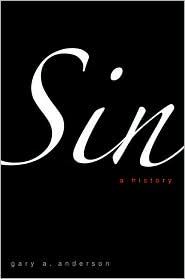
Book Review: Sin: A History


Sin: A History (2009) by Dr. Gary A. Anderson is an excellent treatment on the historical imagery characterizing the idea of sin. I give it 9 out of 10 stars.

Anderson takes us through the idea of sin throughout the Judeo-Christian tradition. Going all the way back to the first temple period of the Old Testament, sin was predominantly viewed as a weight or a burden to be borne. Another figure is the idea of a blemish or stain that requires cleaning. But the predominant figure beginning in the second temple period through the Christian era is the figure of debt.

The book is fraught with Biblical references demonstrating the idea of sin as a debt. The heart of the book reviews many of the ancient ideas of debt, slavery, land ownership, etc. that figure into the Jewish idea of due payment for debt. One need only review the several blog entries I have made on typology to know that I appreciate Anderson's treatment of Old Testament figures of debt and repayment as prefigurements of Christ's satisfaction for the debt of mankind's sin. These figures are really the heart of the book, which ends with a study of Christ's atonement.

Anderson not only draws largely from Scripture, but he also draws from ancient rabbinic or Jewish commentaries on the Biblical texts themselves. He is able to derive a number of insights from the Biblical texts by understanding the Jewish context in which they are understood. For instance, by studying the rabbinic interpretation of Psalm 32:1-2, we learn that in Jewish thought, sins and merits were not seen as a hard and fast legal accounting system. Rather, the love and mercy of God is revealed when he removes sins from the scales in order to tilt it in favor of Israel's merits (p. 107),

The third section of the book deals with "balancing debt with virtues." Anderson is alert to cries of "salvation by works" that are often made by those since the Protestant "Reformation" who deny man's capacity to merit. His defense of man's merit is solid and brings the reader's attention to the generosity of God. For instance, he cites Proverbs 19:17 Anyone who gives alms to the poor is lending to the Lord, the story of King Nebuchadnezzar who is exhorted to give alms to atone for his sins, or even the story of Jesus and the rich man who is told to store up "treasure in heaven" by giving alms. Though he does not do so with great length, Anderson does touch on the key to understanding man's merit as God's gifts returned. He uses the classic analogy of the penniless child (p. 160). The parent gives the child a gift of money. The child in turn buys a present for the parent. The present is essentially the parent's gift returned, yet the child is able to participate in the order of love by parting with something received. The parent is, of course, moved by this act even though it was the parent's gift returned. So too is it with merit (e.g. CCC#2008). Those interested in Catholic apologetics will appreciate the Biblical and traditional strength of such discourses in this book. As such I was also impressed that the book won the 2010 Christianity Today Book Award in the Biblical Studies category.

Some readers may find the book a little challenging to follow due to the immensity of references and word study. Anderson, who is professor of Old Testament/Hebrew Bible in the Department of Theology at the University of Notre Dame, also delves frequently into word origins, etymology, and parallel word usages in antiquity. Some of these sections may require the reader's careful attention as he intersperses words he has previously defined into subsequent sentences. I would not classify the book as "light" reading, although readers far more adept than I no doubt will have no stumbles. Readers who enjoy deep treatment of language will certainly appreciate Anderson's thoroughness.

I learned of this book while listening to archived audio of the Kresta in the Afternoon radio show. The episode, which was from December 22, 2010, was a replay of a February 3 interview with Dr. Anderson. The interview was rated as the #26 best of the year by the show's staff, which is not bad considering what I would guess are the 100+ interviews Al Kresta does every year. As a frequent listener of the show, I personally would have rated the interview much higher. The MP3 archive of the interview with Dr. Anderson can be heard here.

Friday, October 28, 2011

Is the Eucharist only a symbol of Christ's body?

In Biblical typology, the authors of the New Testament often relate things of the NT in light of the Old Testament. This is called typology. You see Paul speak of this in Romans 5 when he identifies Jesus as the superior antitype of Adam. You see the Pauline tradition in Hebrews (ch 8) speak of this when he compares the sacrifices of the OT to the corresponding superior sacrifice of Christ. You also see Jesus speak of this earlier in the John 6 discourse when he spoke of the bread, the manna, that fell from heaven. One consistent characteristic in the order of typology is that the New Testament antitypes are superior to their Old Testament types. Jesus is superior to Adam. Christ's sacrifice is superior to the OT sacrifices. And the Bread of Life in the NT is superior to the manna that fell from heaven.

Catholics believe the Bread of Life, of which Christ spoke in John 6, is the Eucharist, the true body and blood of Christ in sacrament (cf. CCC#1374). Some faith traditions believe that the Eucharist is symbolic-only.1 They believe the bread is ordinary bread, and participating in the Eucharist is a memorial in the sense of "calling to memory" Christ's sacrifice (not in the sense of the re-presentation of the event according to the Jewish understanding of anamnesis2).


Now, if we apply a "symbolic-only" understanding to John 6, we cause a fatal problem in the order of Biblical typology. The NT Bread suddenly becomes inferior to the OT manna. After all, the OT manna was 1) of supernatural origin and 2) of benefit for physical life. When we insist the Bread in John 6 is symbolic-only, we make it inferior to the OT manna because we say its origin is less-than-supernatural, while denying that it is of benefit for eternal life.

It is Christ himself who made the typological comparison between the Bread of Life and the OT manna in John 6:49-51. And therefore, the symbol-only interpretation must be rejected, among other reasons, on the grounds that it violates the superior nature of NT antitypes over their OT types.


1For example, the Southern Baptist Convention in 2000 endorsed the following: "The Lord's Supper is a symbolic act of obedience whereby members of the church, through partaking of the bread and the fruit of the vine, memorialize the death of the Redeemer and anticipate His second coming." In Catholic theology, the Eucharist does have symbolic attributes, but not only symbolic. For examples see Council of Trent 13.3; Pope Paul VI, Mysterium Fidei, et al.

2See for example, Rabbi Dr. Stuart Dauermann's explanation of the Jewish idea of anamnesis in the article Seeds, Weeds, and Walking the High Wire: The Role of the Remnant - Embodying Israel’s Destiny. He writes in one example: "The holy past is no mere collection of data to be recalled, but a continuing reality to be honored or desecrated."

Saturday, October 15, 2011

Christ, the bridegroom (why a priest must be male)

In an era where there remains confusion or ignorance on why the Catholic Church only ordains men to the office of the priesthood, I thought it helpful to delve a little into a dimension of the theology of why this must be so.

THE EUCHARIST=CALVARY
In Church theology:
[T]he bishop or the priest, in the exercise of his ministry, does not act in his own name, "in persona propria:" he represents Christ, who acts through him: "the priest truly acts in the place of Christ", as Saint Cyprian already wrote in the third century.[15] It is this ability to represent Christ that Saint Paul considered as characteristic of his apostolic function (cf. 2 Cor 5:20; Gal 4:14). The supreme expression of this representation is found in the altogether special form it assumes in the celebration of the Eucharist, which is the source and centre of the Church's unity, the sacrificial meal in which the People of God are associated in the sacrifice of Christ: the priest...then acts..."in persona Christi,"[16] taking the role of Christ, to the point of being his very image, when he pronounces the words of consecration.[17] (Inter Insigniores, Congregation for the Doctrine of the Faith, 5b, 1976)
I'd like to further examine the notion that Christ acts through the priest supremely through the celebration of the Eucharist. Without getting into a long apologetic, Catholic theology teaches that the Eucharist is the sacrifice of Christ that transpired on Calvary, extended through time.

CCC#1367 The sacrifice of Christ and the sacrifice of the Eucharist are one single sacrifice: "The victim is one and the same: the same now offers through the ministry of priests, who then offered himself on the cross; only the manner of offering is different."
One can find many apologetic treatments on why the Church teaches this is so. A couple Scriptural examples include Christ at the Last Supper holding up the bread and saying "This is my body which is given for you" (Lk. 22:19). In the verse, the Greek verb "is" in both instances is in the present tense. The sacrifice of Calvary was thus already extended through time at the Last Supper. Many translations, such as the literal King James, have the words: "lamb slain before the foundation of the world" (Rev. 13:8). This also speaks to the timelessness of the sacrifice of Christ the Lamb (cf. John 1:29). Other examples include the discourse of John 6, in which Jesus repeats phrases like: "I am the living bread which came down from heaven; if any one eats of this bread, he will live for ever; and the bread which I shall give for the life of the world is my flesh" (John 6:51). Paul echoes the same sentiment when he writes: "The cup of blessing which we bless, is it not a participation in the blood of Christ? The bread which we break, is it not a participation in the body of Christ?" (1 Cor. 10:16); and immediately after describing the Last Supper: "Whoever, therefore, eats the bread or drinks the cup of the Lord in an unworthy manner will be guilty of profaning the body and blood of the Lord. ... For any one who eats and drinks without discerning the body eats and drinks judgment upon himself" (1 Cor. 11:27,29). Catholics also call the blessing the "consecration," echoing Christ's Last Supper words when he held up the bread, spoke the words, and told the Apostles to "do this" in his memory.

THE NUPTIAL NATURE OF SACRIFICE & COVENANT
Going forward with the theology that the Eucharist is truly the single sacrifice of Calvary offered in "an unbloody manner" (cf. CCC#1367), it is vital to understand the teaching of a male-only priesthood with the idea that Christ's sacrifice was a "nuptial" event. Christ's wedding was on the Cross. He was the bridegroom wedded to the Church, his bride.

Even from the most ancient days, God's covenant with his people has been revealed with nuptial imagery. For example, God in reconciling the Israelites' loyalty to the false god Ba'al describes His union with the people of God in nuptial terms:
And there I will give her her vineyards, and make the Valley of Achor a door of hope. And there she shall answer as in the days of her youth, as at the time when she came out of the land of Egypt. "And in that day, says the LORD, you will call me, 'My husband,' and no longer will you call me, 'My Ba'al.' For I will remove the names of the Ba'als from her mouth, and they shall be mentioned by name no more. And I will make for you a covenant on that day with the beasts of the field, the birds of the air, and the creeping things of the ground; and I will abolish the bow, the sword, and war from the land; and I will make you lie down in safety. And I will betroth you to me for ever; I will betroth you to me in righteousness and in justice, in steadfast love, and in mercy. I will betroth you to me in faithfulness; and you shall know the LORD. (Hosea 2:15-20)
It is no accident that God intermingles his betrothal to Israel as making a "covenant" with them. God makes a "covenant" with Abraham, promising him many descendants (Gen. 17:6-9). This covenant is completed when Abraham demonstrates his faith in God by preparing to sacrifice his son at God's prompt (Gen 22:16-17). Abraham is allowed to sacrifice a "ram" instead (v. 13).

As the late, great Bishop Fulton Sheen said:
Throughout the Old Testament, the union of God and Israel is described as Nuptials. God is pictured as the Husband; Israel as the Bride; and their union is consummated in sacrifice. (Bishop Fulton Sheen, Three to Get Married, chapter 11)
The event of Abraham's willingness to sacrifice his son is a strong foreshadowing of God sending His Son as a sacrifice, with the blood of "a new covenant" (e.g. Lk. 22:20). Reading texts like Hosea in light of covenant and sacrifice, we can begin to see how Christ's sacrifice on the Cross was a nuptial event.

CHRIST, THE BRIDEGROOM
Consider the nuptial imagery in Christ's life leading up to his sacrifice.

He performs his first public miracle at the wedding at Cana (John 2:1-11). Notice the inclusion of "wine" in the episode. In addition to holding up wine at the Last Supper and equating it with his blood, wine is a consistent theme in nuptial episodes in Scripture. The Song of Songs, a tale about a bride-to-be longing for her bridegroom, is fraught with references to wine or vineyards (e.g. Sg. 1:2,6,14; 2:13,15; 4:10; 5:1; 6:11; 7:2,8-9,12; 8:2,11,12). Remember the Hosea passage we referenced earlier when God promises a "vineyard" to his betrothed Israel. From such passages, we can view and understand the Eucharist in a new light, and how the people of God are wedded, so to speak, to Christ through the sacrifice.

Christ's Parable of the Ten Virgins describes the Church seeking to enter the kingdom as the bride uniting with the bridegroom: "Then the kingdom of heaven shall be compared to ten maidens who took their lamps and went to meet the bridegroom" (Mat. 25:1). Christ even compared himself to a "bridegroom" when speaking to John the Baptist's disciples (Mat. 9:14-15).

John makes reference to rejoicing "at the bridegroom's voice" (John 3:29) which is a strong echo of the excited bride-to-be: "The voice of my beloved!" again from the nuptial Song of Songs (2:8).

Shortly before Christ is crucified, nuptial imagery lines the Biblical text. In Song of Songs, the bride marvels at the fragrant "anointing oils" (Sg. 1:3) of the bridegroom, and the fragrance of his "cheeks" and lips compared to "myrrh" (Sg. 5:13). It was customary in Jewish antiquity for both nuptial parties to be heavily perfumed:
Garments were perfumed to such an extent that an old marriage song (Ps. xlv. 9 [A. V. 8]) could say of the royal bridegroom, "All thy garments smell of myrrh, and aloes, and cassia." Beds were perfumed with "myrrh, aloes, and cinnamon" (Prov. vii. 17). The bride in Cant. iii. 6 was perfumed with all sorts of incense; and noble guests were honored by being sprinkled with perfume or incense (Luke vii. 46; comp. Lane, "Manners and Customs of the Modern Egyptians," iii. 8). It was customary among noble Jews to pass incense ("mugmar") around on a brazier after meals (comp. Ber. vi. 6). (Jewish Encyclopedia entry on Incense)
Myrrh of course is one of the fragrant gifts brought by the wise men to the newborn Jesus (e.g.Mat. 2:11). The bride-to-be in Song of Songs is adorned with the perfume "nard" (1:12), which is the same perfume with which Mary of Bethany anointed Christ's feet (Mk. 14:3; John 12:3) shortly before his Passion.

Even closer to the final Crucifixion, Christ is stripped of his garments (e.g. Mat. 27:31-35), which of course is an action the marital couple does prior to consummation.

Finally, Christ is preparing to breath his last breath on the Cross, and what does he say but: "It is finished," (John 19:30) which can also be translated "It is consummated." The full verse reads: "When Jesus had received the vinegar, he said, 'It is finished'; and he bowed his head and gave up his spirit." The beverage was vinegar or sour "wine" (e.g. ESV, NASB, NJB), the beverage of a wedding ceremony. The marriage of the bridegroom with his bride the Church was consummated.

That understanding does not replace other interpretations of "it is finished," but rather works in concert with them to showcase the richness and depth of holy Scripture. For instance, Dr. Scott Hahn's treatment The Hunt for the Fourth Cup shows how "it is finished" also refers to the completion of the Passover sacrifice meal begun in the upper room.

THE PRIEST, THE BRIDEGROOM
And so we come full-circle. The priest, when confecting the Eucharist, which is the same sacrifice of Calvary, is the instrument of Christ himself who performs the sacrifice.

When we grasp this reality, we can better understand why in order for the sacrament to be an effective "sign," the priest must be male. Christ's very incarnation as a man accomplishes the masculine function of the bridegroom. It would be an ontological impossibility for this to be performed by a bride. It is Christ who "gives" to the bride on the Cross, begetting spiritual life. A good study of Scripture recognizes the theophanies in life and how they reflect unseen realities. In the role of a man as the giver during intercourse, we can understand how it is an outward sign of Christ the bridegroom who is the "giver" of himself at his nuptial event on the Cross. The outward masculinity points to the ontological reality of a man giving himself mystically for his bride.

Christ, when healing the paralytic lowered through the ceiling (e.g. Mark 2:1-12) relates the outward sign with the inward reality. The crowd doubts that Jesus forgave the man's sins when he said, "Yours sins are forgiven." To show the crowd that the man was truly spiritually "healed" he commanded the man to rise and walk. When the man stood, he showed outwardly the healing that had occurred inwardly.

The sacraments instituted by Christ utilize outward instruments that show us what occurs inwardly. For example, Baptism requires water (cf. Acts 8:36). Water is used to wash. As Peter teaches us, this water is not just for removing dirt, but for clearing the conscience by removing the stains of sin (1 Pet. 3:20-21). The outward sign effects the inward reality.

And so we see how the outward sign of a man brings about the inward reality of the true bridegroom, consummated to his bride on the Cross.1 It would be ontologically impossible for a woman to sacramentally and truly act in persona Christi, the bridegroom.

Here is more from Inter Insigniores:
The Christian priesthood is therefore of a sacramental nature: the priest is a sign, the supernatural effectiveness of which comes from the ordination received, but a sign that must be perceptible[18] and which the faithful must be able to recognize with ease. The whole sacramental economy is in fact based upon natural signs, on symbols imprinted upon the human psychology: "Sacramental signs", says Saint Thomas, "represent what they signify by natural resemblance".[19] The same natural resemblance is required for persons as for things: when Christ's role in the Eucharist is to be expressed sacramentally, there would not be this "natural resemblance" which must exist between Christ and his minister if the role of Christ were not taken by a man: in such a case it would be difficult to see in the minister the image of Christ. For Christ himself was and remains a man. (Inter Insigniores, 5c)
This, of course, makes a woman no less human or competent than a man just because she cannot by her nature act in the person of the bridegroom. By the same token, a man is not inferior or less-than-human because he by his very nature cannot gestate human life within himself and give birth. "Male and female He created them," (Gen. 5:2) Scripture says. Paul does not tell us that differences in spiritual gifts are a matter of inequality but rather complementarity within the body of Christ (1 Cor. 12:27-30). Women and men participate in the "royal priesthood" (e.g. CCC#1268) of Christ, just as men participate as members of the "bride" the Church. Yet these are not sacramental realities as are the priest or the Eucharist which demand the natural outward sign. When we offer sacrifices in our lives, we do not truly and sacramentally make present the one sacrifice of Calvary in the way the Eucharist does.

Inter Insigniores expounds further:
Christ is the Bridegroom; the Church is his bride, whom he loves because he has gained her by his blood and made her glorious, holy and without blemish, and henceforth he is inseparable from her. This nuptial theme which is developed from the Letters of Saint Paul onwards (cf. 2 Cor 11:2; Eph 5:22- 23) to the writings of Saint John (cf. especially Jn 3:29; Rev 19:7,9), is present also in the Synoptic Gospels: the Bridegroom's friends must not fast as long as he is with them (cf. Mk 2:19); the Kingdom of Heaven is like a king who gave a feast for his son's wedding (cf. Mt 22:1-14). It is through this Scriptural language, all interwoven with symbols, and which expresses and affects man and woman in their profound identity, that there is revealed to us the mystery of God and Christ, a mystery which of itself is unfathomable.

That is why we can never ignore the fact that Christ is a man. And therefore, unless one is to disregard the importance of this symbolism for the economy of Revelation, it must be admitted that, in actions which demand the character of ordination and in which Christ himself, the author of the Covenant, the Bridegroom and Head of the Church, is represented, exercising his ministry of salvation which is in the highest degree the case of the Eucharist—his role (this is the original sense of the word "persona") must be taken by a man. This does not stem from any personal superiority of the latter in the order of values, but only from a difference of fact on the level of functions and service. (Inter Insigniores, 5e-f)
If one meditates on the divine mystery of Christ as the bridegroom, it is easier to understand why Christ freely chose only men to serve in the office of Apostle. The same can be said of the Apostles who subsequently only appointed men to ministerial offices.

SUMMARY
The one sacrifice of Christ on Calvary is the same sacrifice as that offered in the Eucharist during the Divine Liturgy. In that sacrifice, Christ is the bridegroom, consummating his marriage to his bride, the Church. This marriage is a new covenant. The priest acts in persona Christi when confecting the Eucharist. Since a sacrament demands the natural sign to truly bring about the reality at hand, any priest participating in the one priesthood of Christ must be a man.

Additional works of interest:
Ordinatio Sacerdotalis, Pope John Paul II
Some Scriptural Arguments For The All-Male Priesthood by David P. Lang, Catholic Culture

1I would be remiss if I did not also point out that Christ as bridegroom is not the only reason why the priesthood can only be fulfilled by a man. Scripture, for instance, also teaches of the headship of a man befitting the role of a pastor and shepherd. The sacrificial Lamb foreshadowing Christ in the Old Testament had to be a male, (cf. Ex. 12:5). Etc... This article is intended to examine the richness of the nuptial nature of Christ and his sacrifice.